FOR PARIS MEN’S FASHION WEEK 2026, KENZO RETURNS HOME
For Paris Men’s Fashion Week Fall 2026, Kenzo stages a deeply symbolic return—welcoming guests not to a traditional runway venue, but into the former residence of its founder, Kenzo Takada. Set in the Bastille district, the house becomes both setting and statement: a living archive, a place of memory, and a site where past and present quietly, deliberately converge.
The House: An Oasis Reawakened
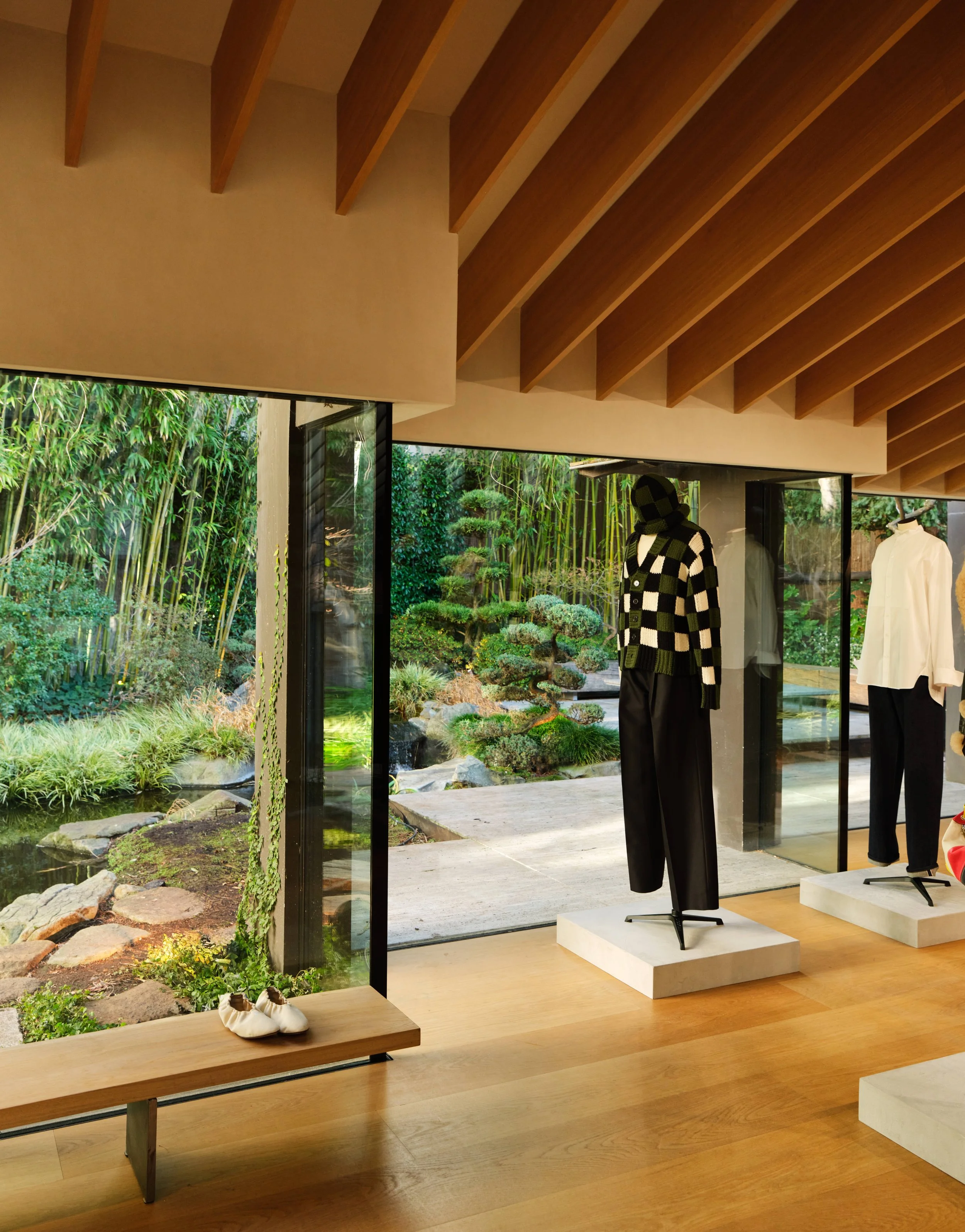
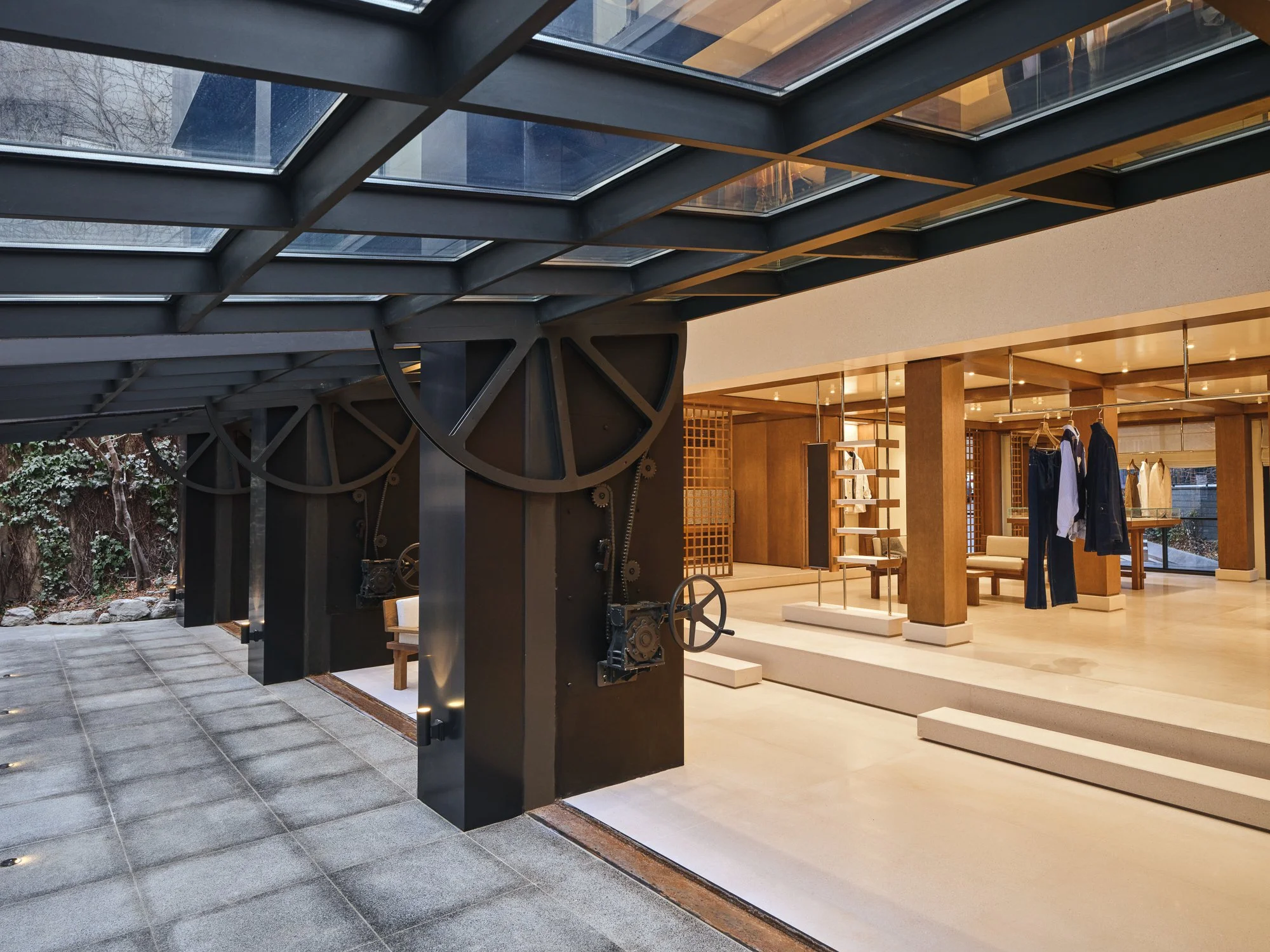
Designed by Kenzo Takada alongside architect Xavier de Castella, the 1,600-square-meter house was conceived as an “oasis house”—a refuge that balanced introspection with creative vitality. Completed between 1989 and 1993, it served as Takada’s home until 2009, hosting everything from moments of meditation to photoshoots, showrooms, and legendary gatherings that mirrored the exuberant spirit of his Maison.
Rooted in a dialogue between French and Japanese aesthetics, the residence draws inspiration from Takada’s childhood, notably his father’s teahouse in Himeji. Tatami mats, Shoji sliding doors, and a space dedicated to tea ceremonies sit alongside an indoor pool and a lush Japanese garden animated by bamboo, moss, maple and cherry trees, and a koi pond. Kenzo Takada famously meditated at a precise spot facing the water—a ritual Nigo reenacted upon his first visit, underscoring the quiet continuity between founder and current creative director.
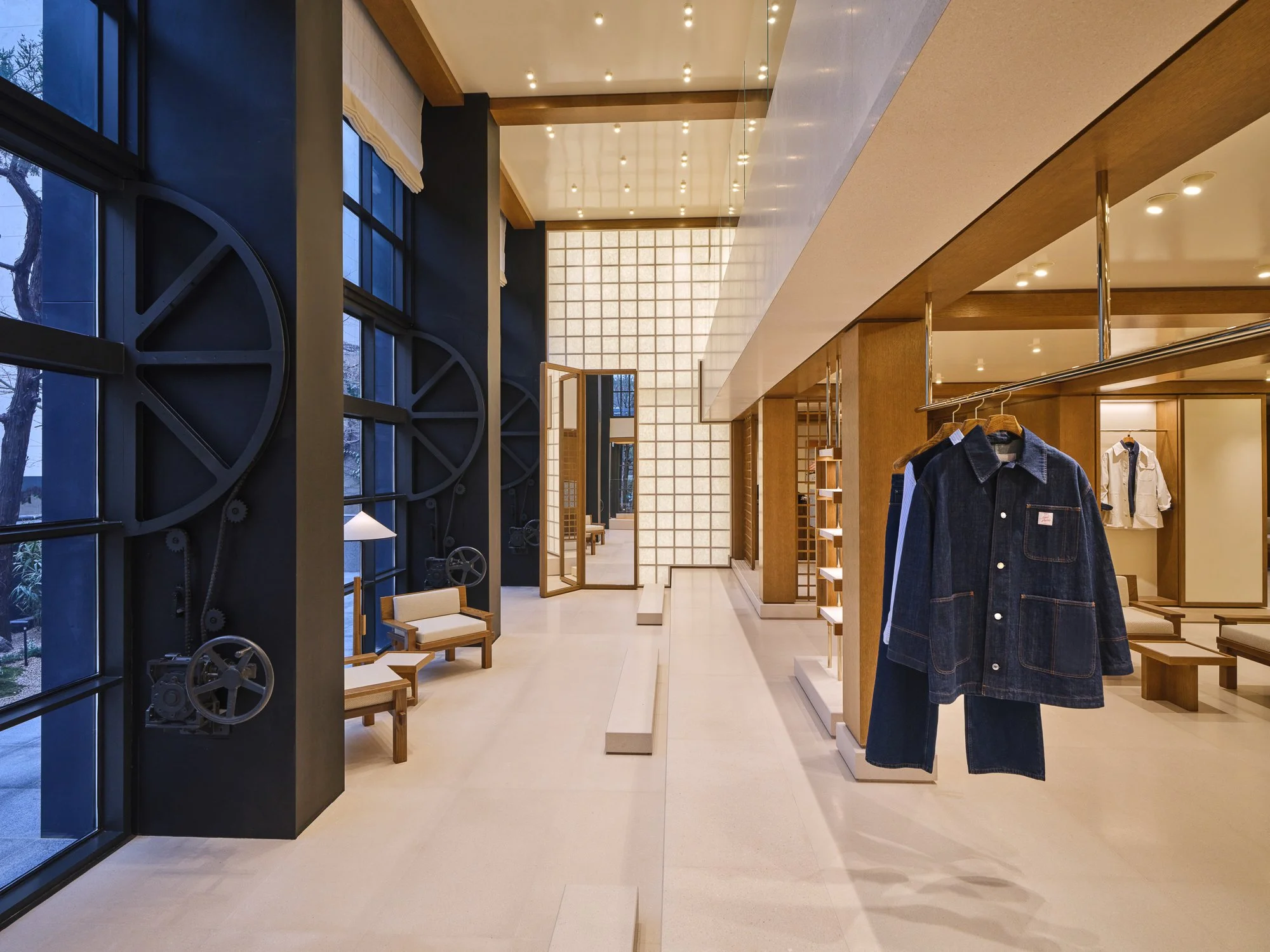
Renovated in 2018–2019 by architect Kengo Kuma and now owned by Isabelle and Olivier Chouvet of The Independents, the house stands restored yet reverent—its spirit intact, its relevance renewed.
The Collection: Fall 2026 as Homecoming
If the house is the soul, the Fall 2026 collection is its conversation. For Nigo, this season marks a homecoming—not only to Kenzo’s origins, but to the essential exchange of cultures that defined Takada’s vision and continues to animate the brand today.
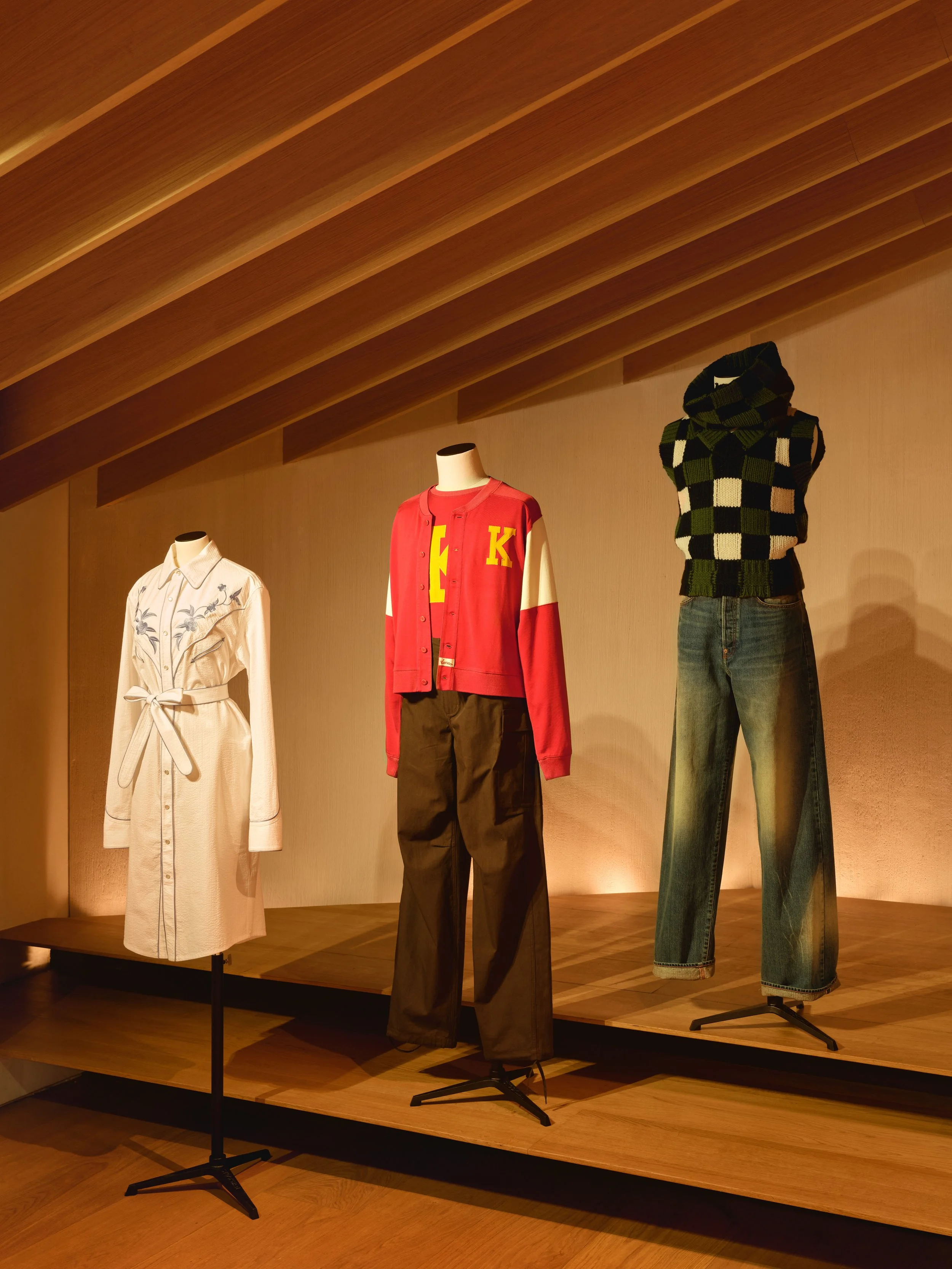
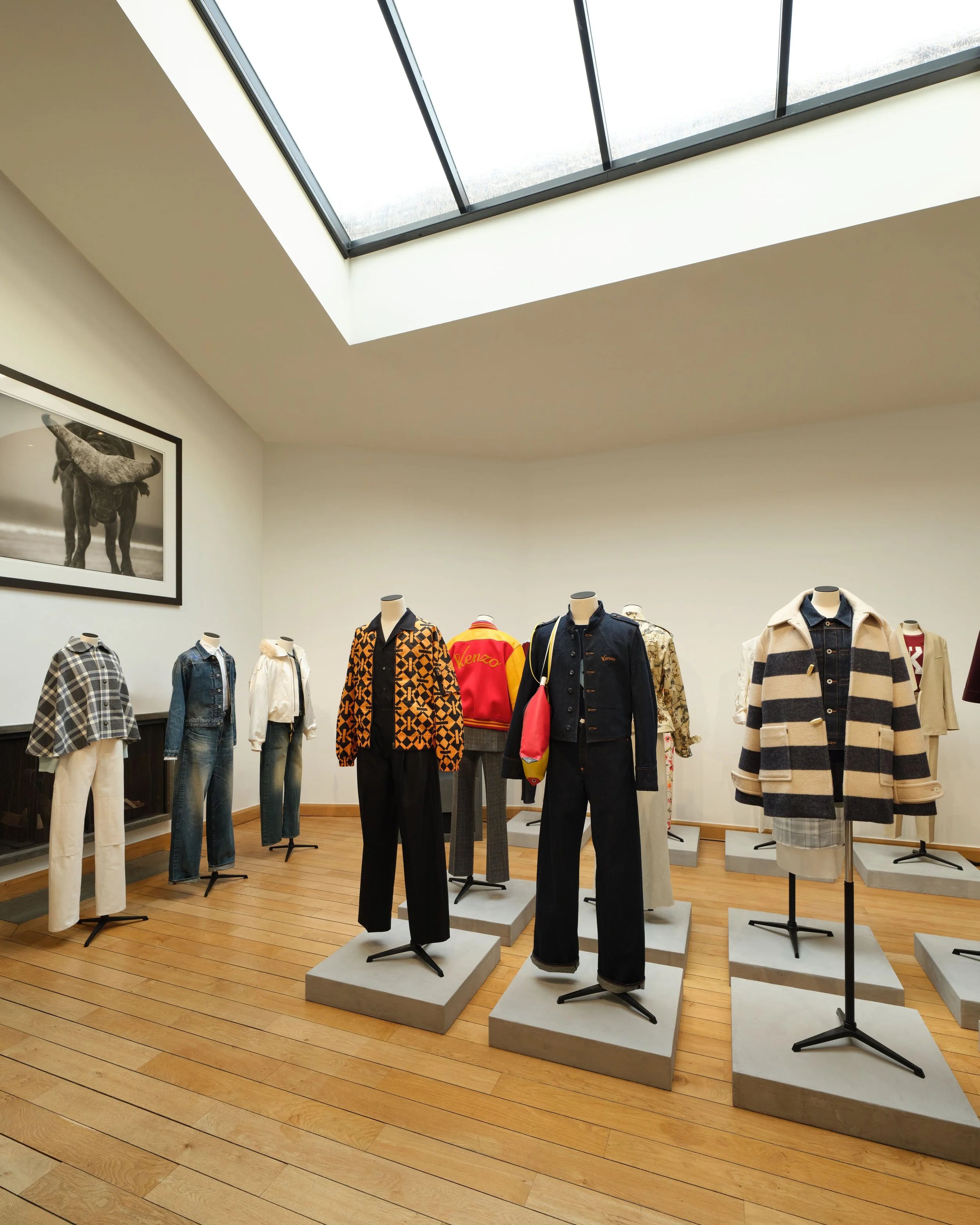
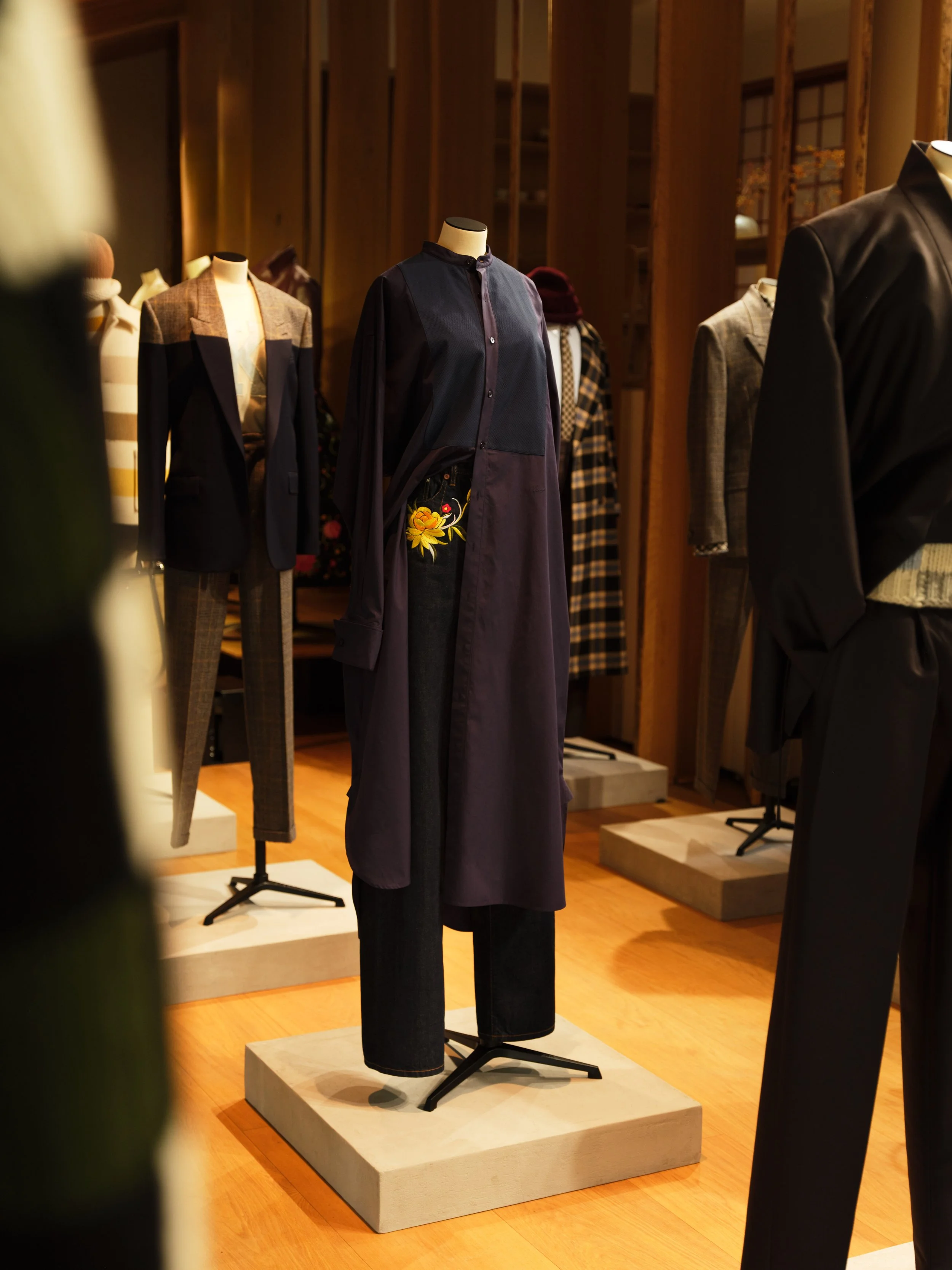
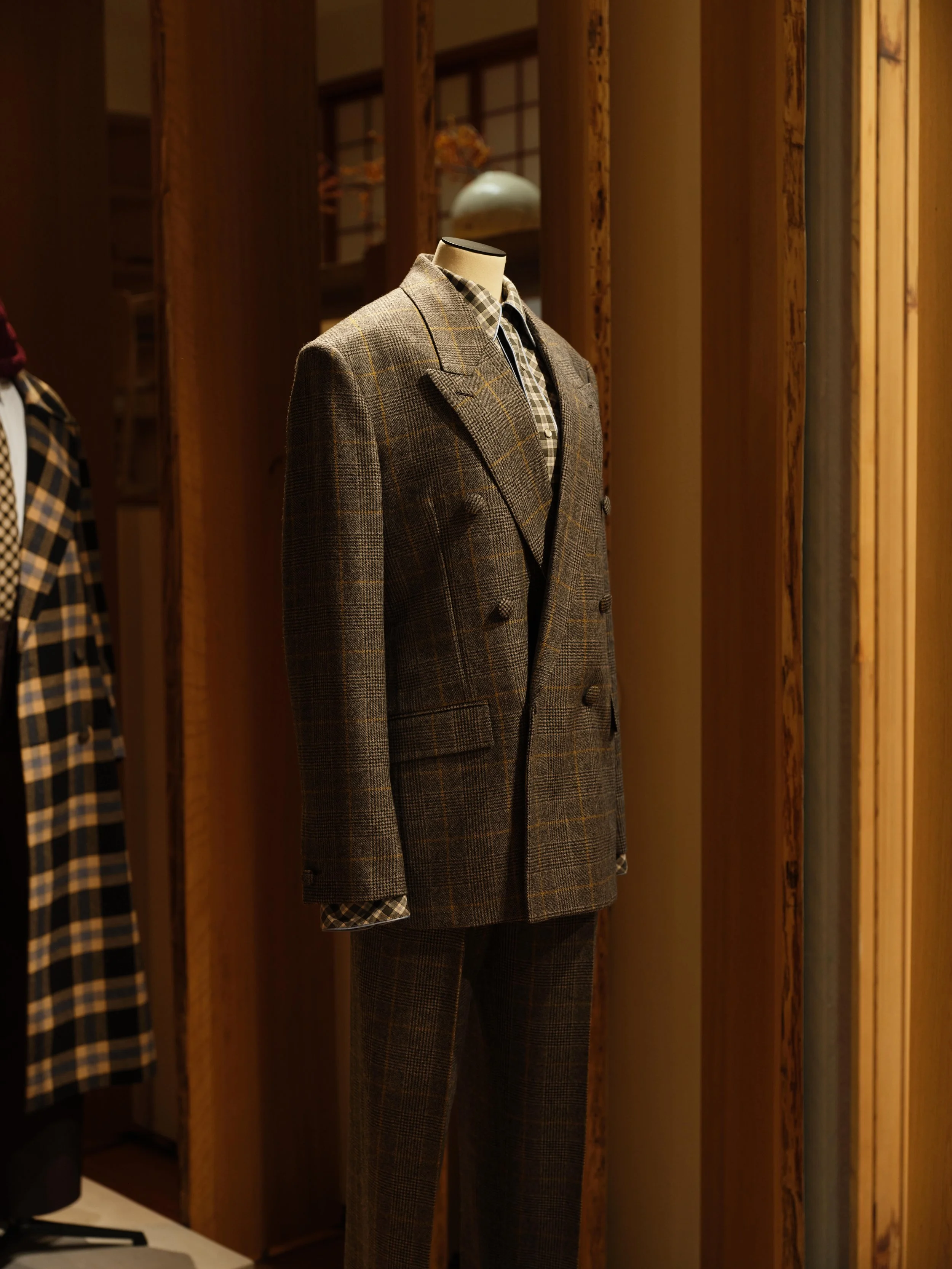
French and Japanese aesthetics intertwine fluidly as Nigo brings his signature workwear sensibility into dialogue with Americana and global archetypes. Varsity graphics and flannel cowboy shirts coexist with Chinese pankou fastenings, refined Italian tailoring, and kimono-informed silhouettes. The result is not collision, but harmony—an ease of cultural mixing that feels instinctive rather than constructed.
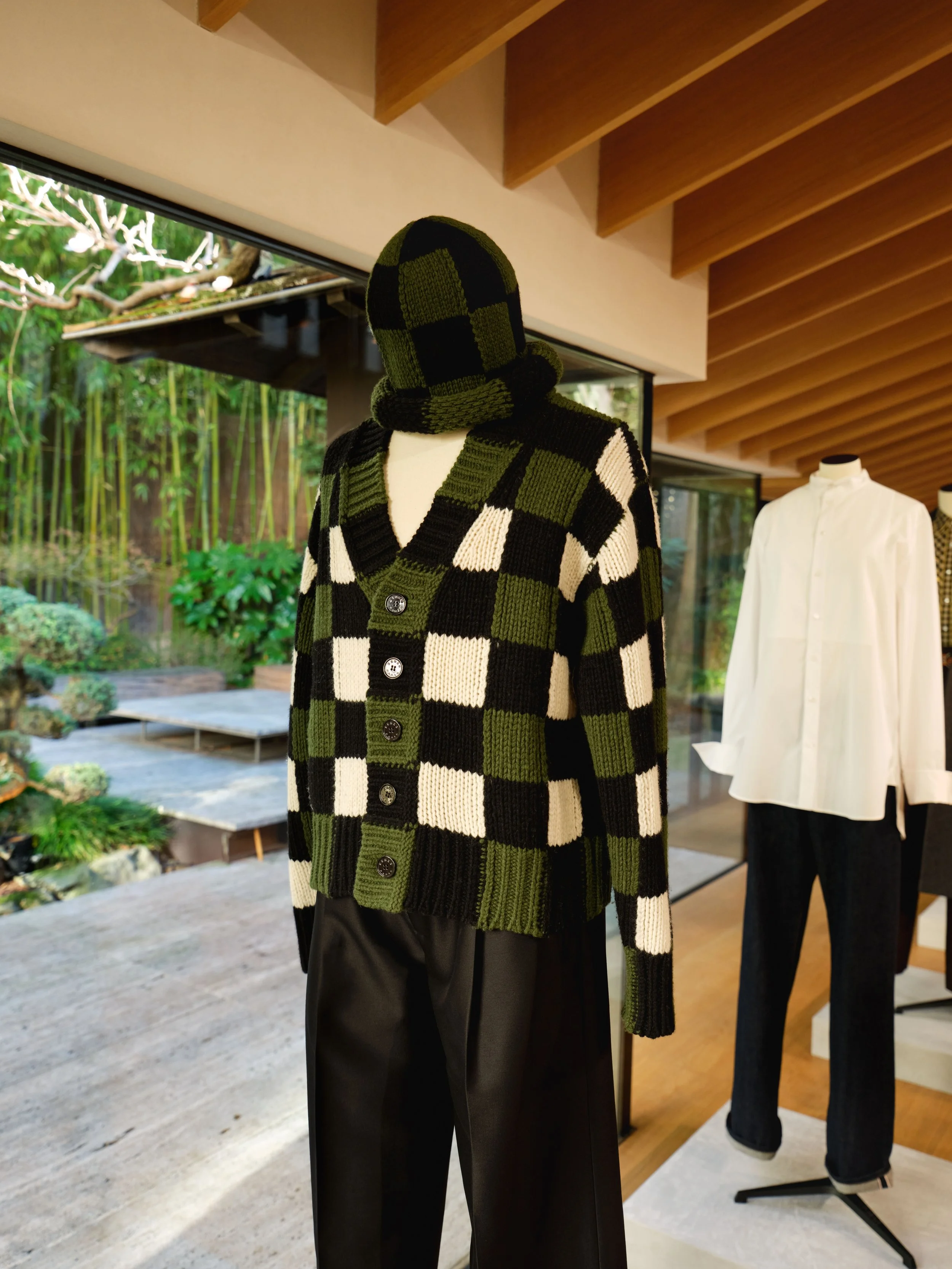
Visual play runs throughout the collection. Two-tone neo-tailoring, checkerboard knits, and bold bi- and tri-colour striping animate familiar forms. Archival references are reactivated: original Kenzo labels, silhouettes, and patterns are revisited with a contemporary eye. The tiger—an emblematic figure from 1980s Kenzo Jungle—reappears with renewed energy, while the 1986 Kite bag is faithfully replicated and evolved into new shoulder and tote iterations.
The letter “K,” drawn from the archives, anchors the collection with a strong varsity spirit across t-shirts, jackets, and cardigans. It appears alongside a newly developed Kenzogram pattern, translated across denim, nylon, jersey, knitwear, and belts—an emblem system that bridges heritage and modernity.
The Archive: Memory as Material
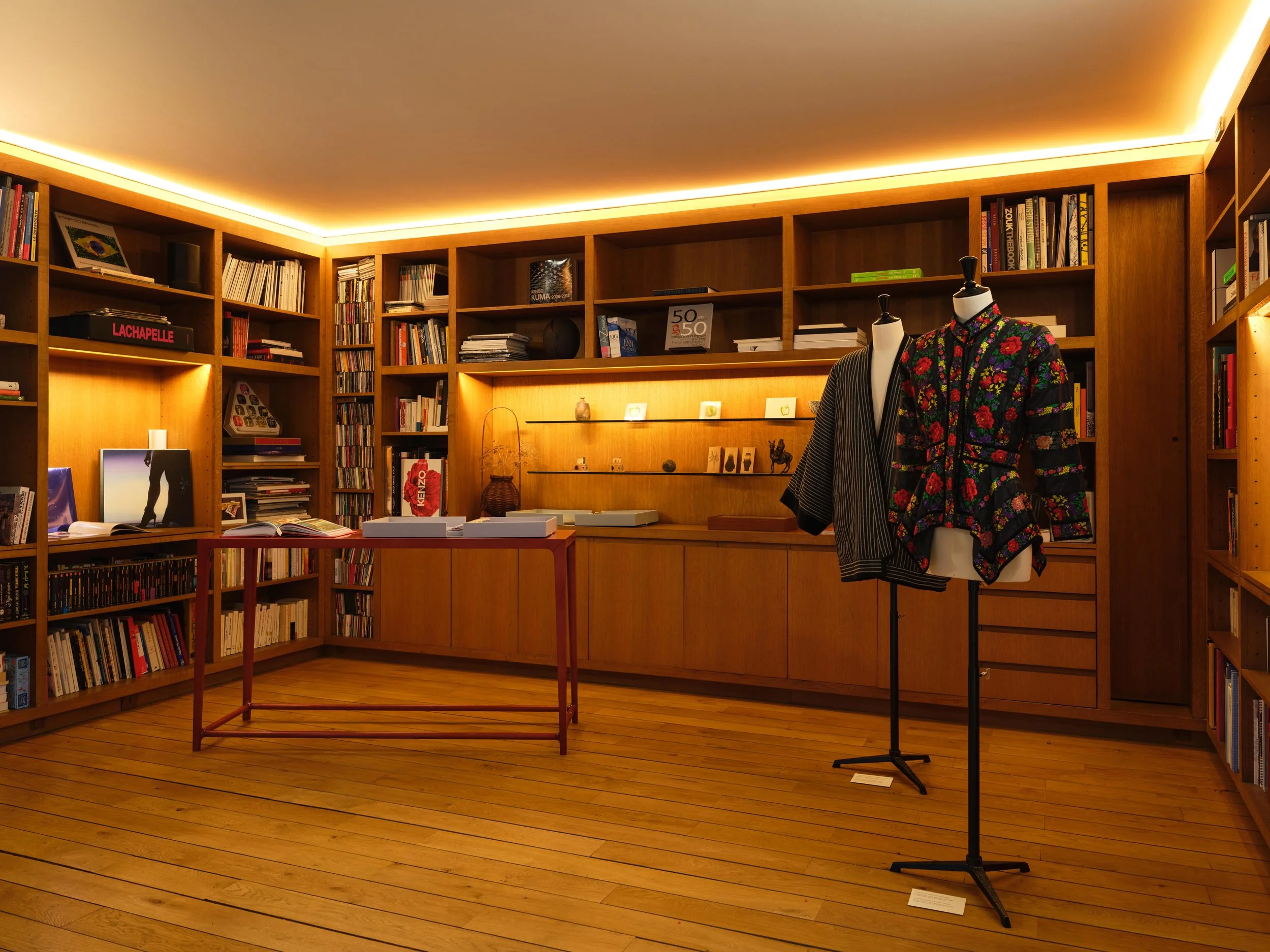
Within the house’s library room, a curated selection from the Kenzo archive offers context and continuity. Sketches, editorials, and invitations trace the evolution of Kenzo Takada’s creativity from the Maison’s founding in 1970 through the late 1990s. Two garments stand as quiet anchors: a men’s quilted jacket from Fall Winter 1983 and a woman’s embroidered jacket from Fall Winter 1987.
Together, they attest to the enduring originality of Takada’s vision—his instinctive blending of geometrical and figurative motifs, his silhouettes, his borrowings from Americana. These codes remain generative for Nigo, not as references frozen in time, but as living ideas capable of continual reinterpretation.
The Kitchen: Ritual and Routine
Even the experience of hospitality reflects intimacy and authorship. Télescope, Nigo’s favourite Parisian coffee shop, takes over the kitchen with a bespoke menu crafted around the designer’s preferred coffee filter—recreating his daily ritual between home and the Kenzo atelier. Guests are offered matcha cookies, mini ham sandwiches accented with shiso, and fresh goat cheese wrapped in nori with ume, blending comfort with subtle cultural nuance.
A Return, Not a Revival
Kenzo’s Fall 2026 presentation is not about nostalgia. It is about presence—about inhabiting the space where ideas once lived and allowing them to breathe again through contemporary expression. By returning to Kenzo Takada’s home, the Maison affirms that its future is strongest when grounded in its origins, where craft, culture, and curiosity were never separate, but always in conversation.