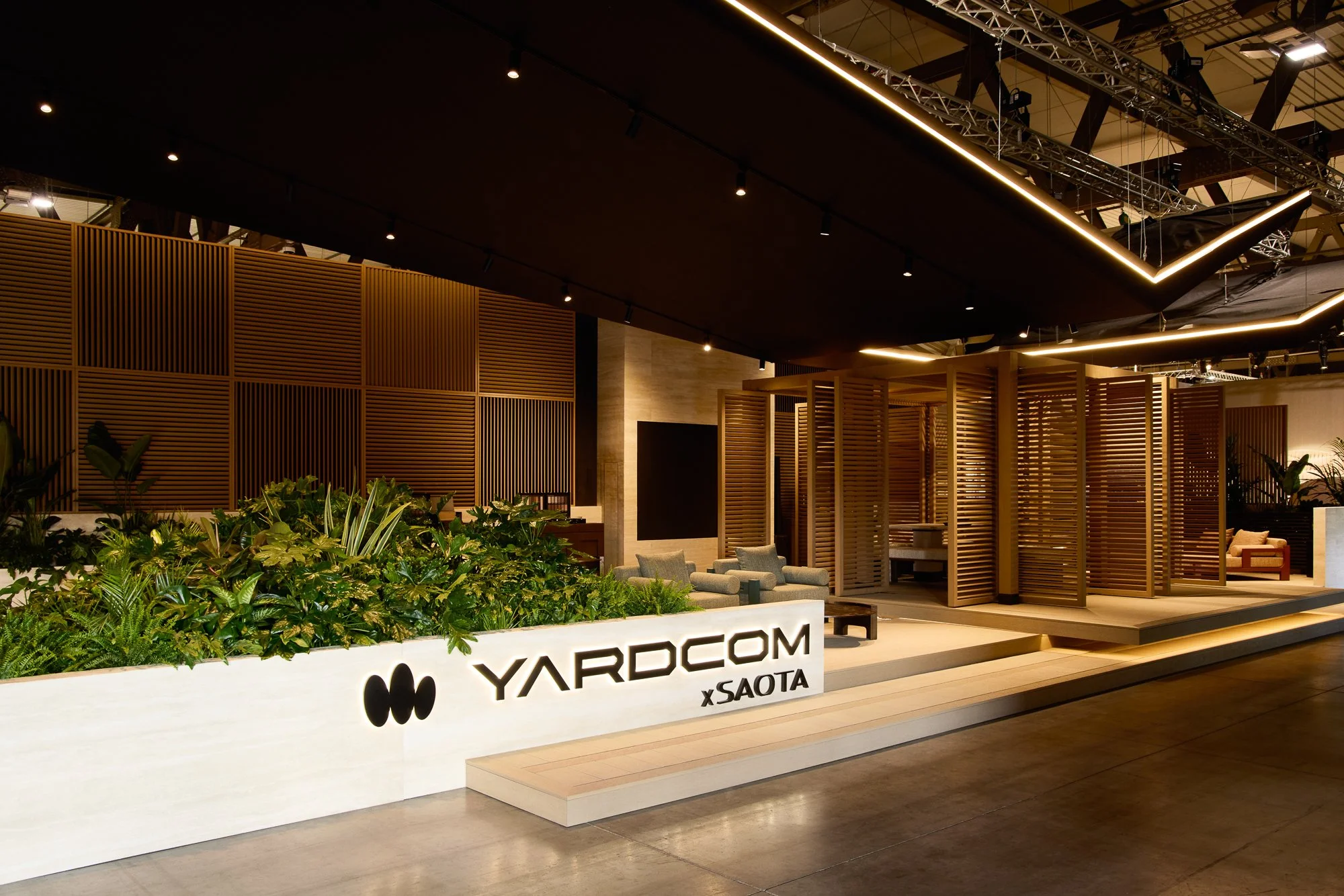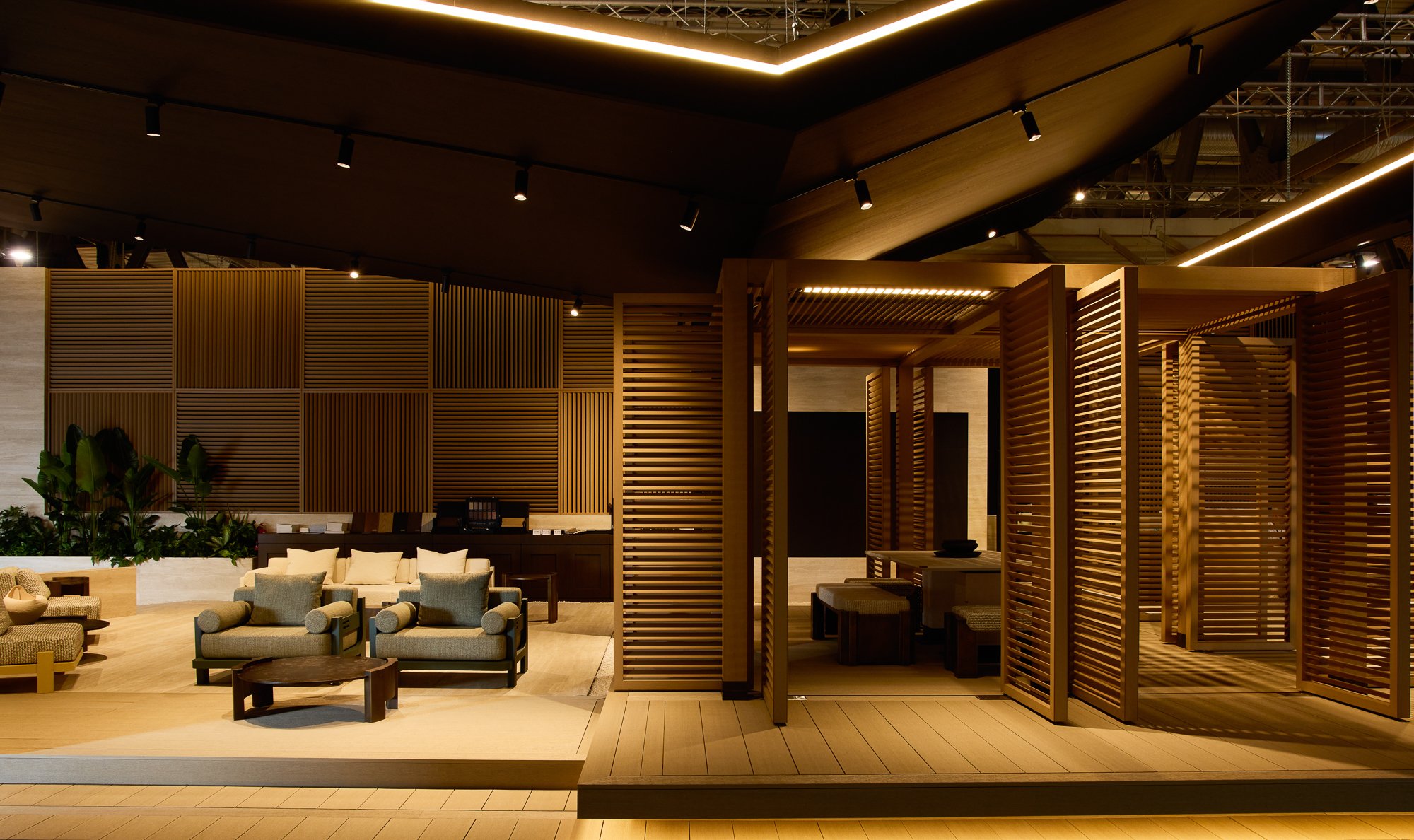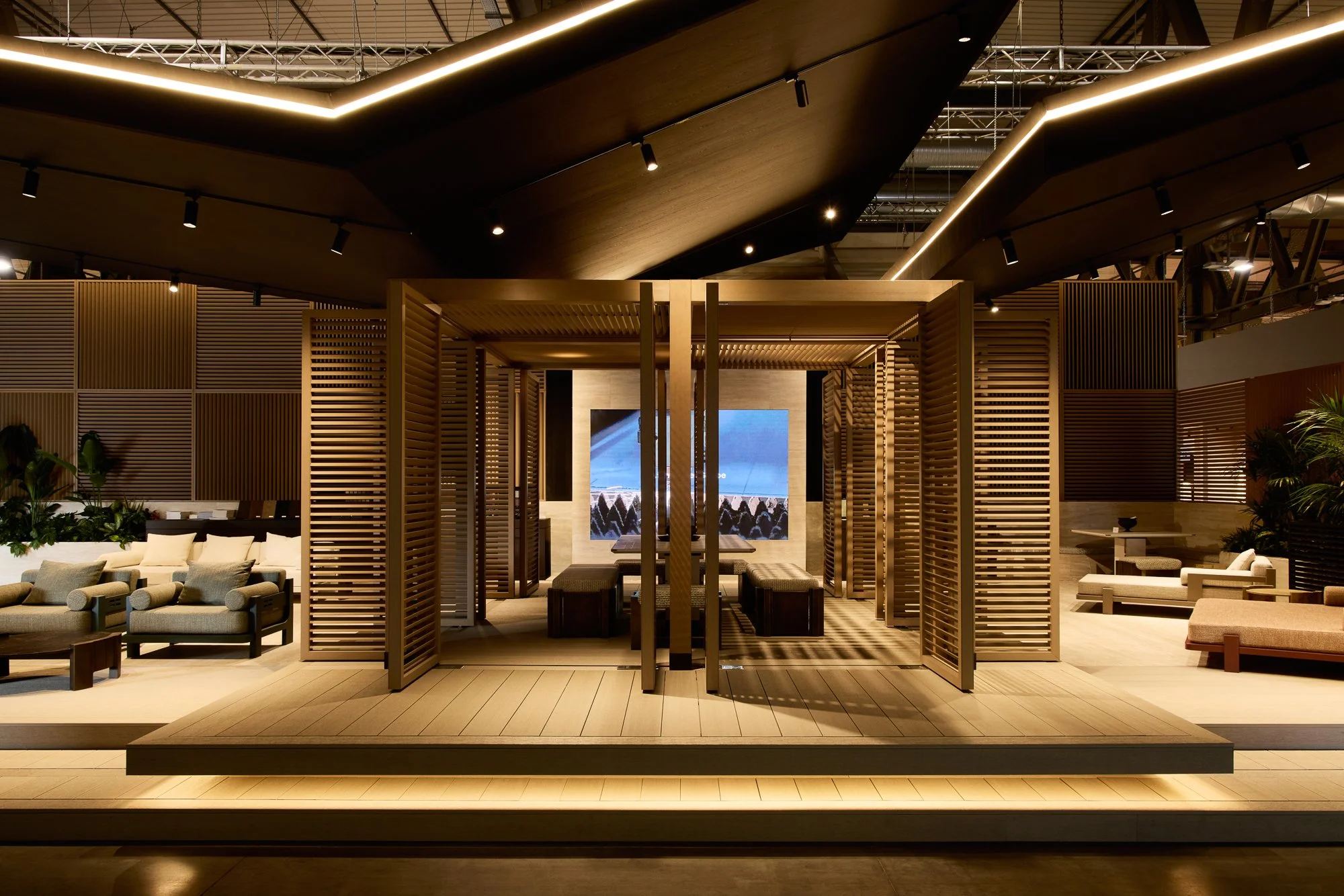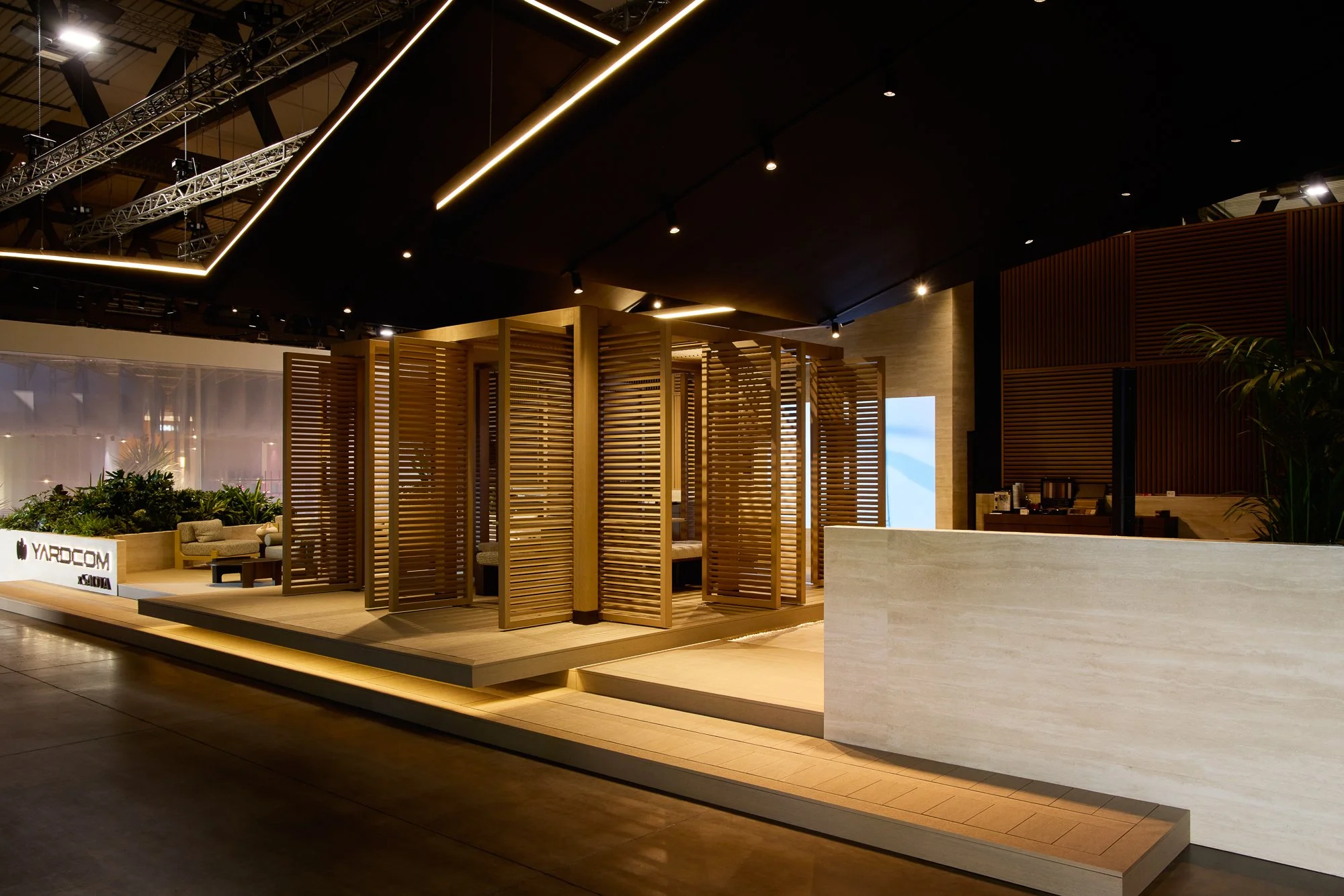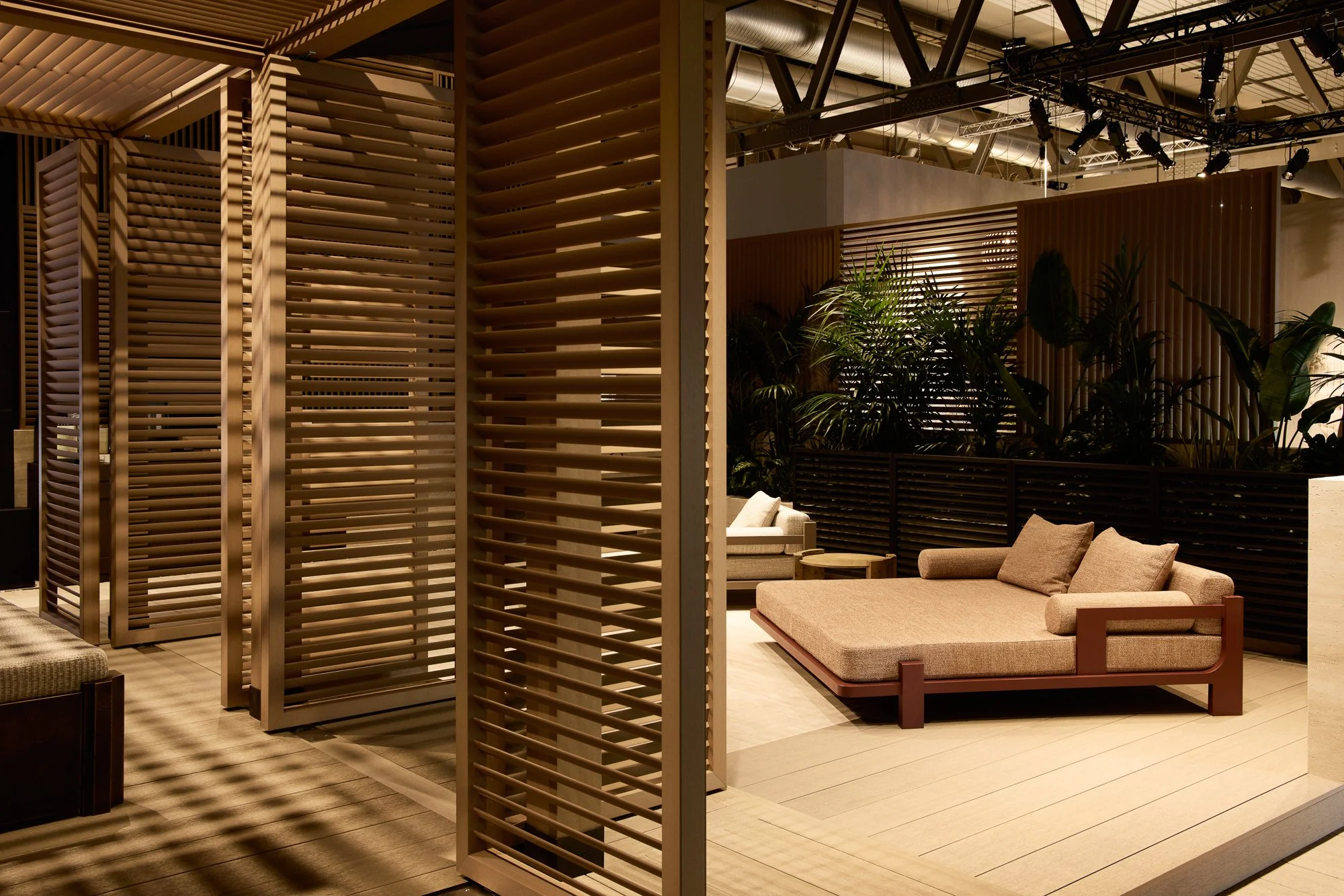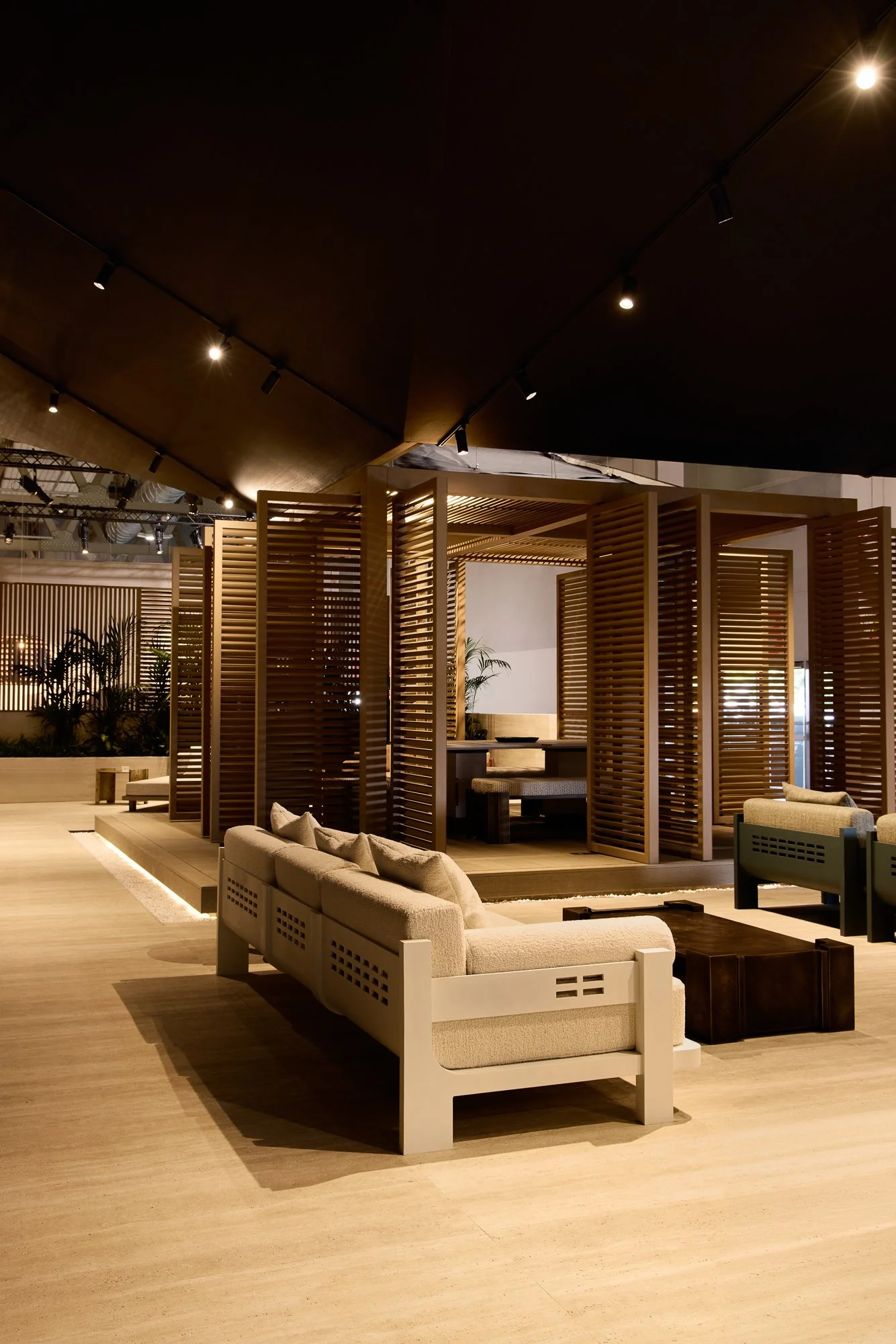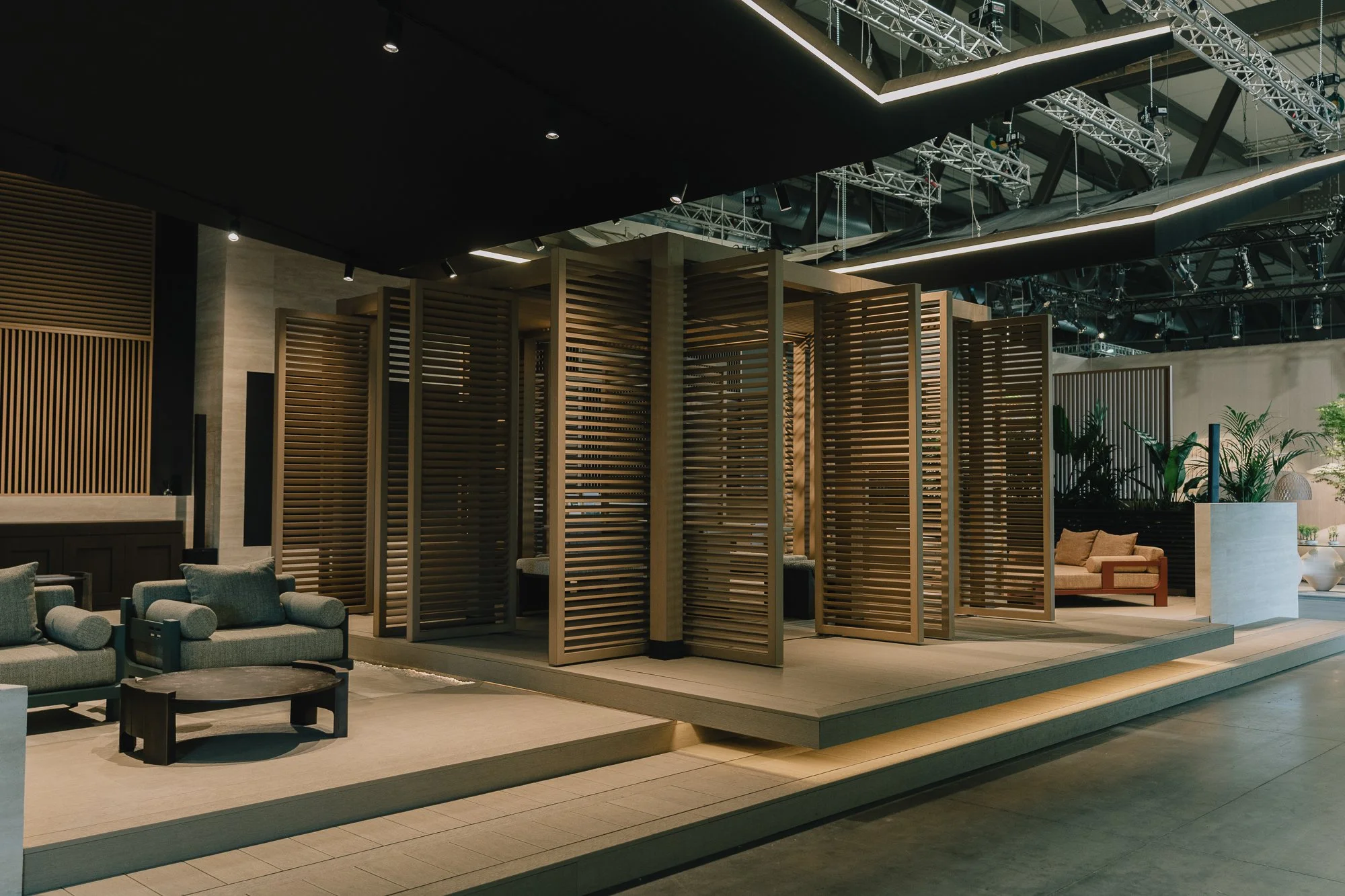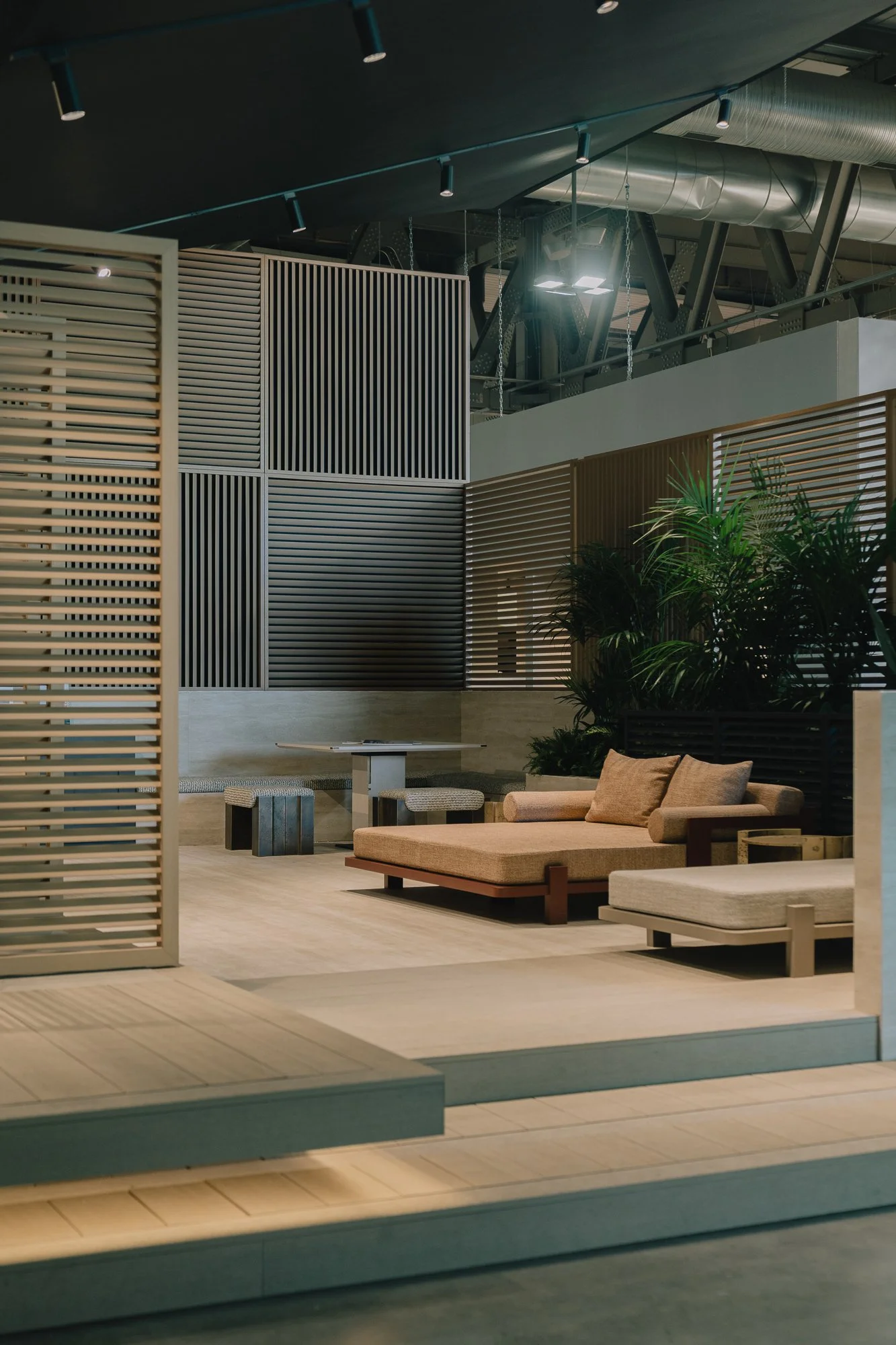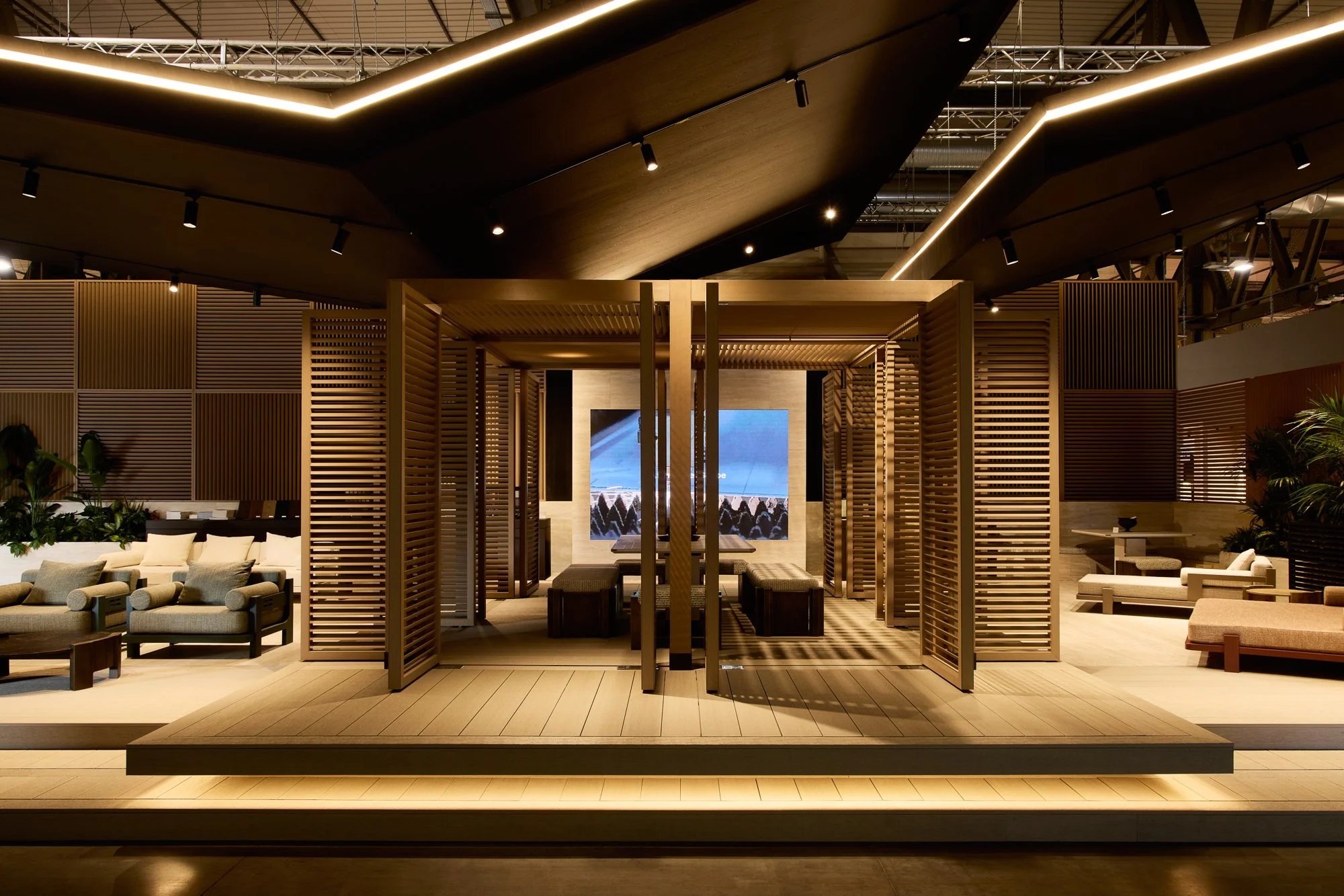
At Salone del Mobile.Milano 2026, where design language is often fragmented across disciplines and geographies, SAOTA introduces a pavilion that resists categorization. Created in collaboration with OKHA and YARDCOM, the installation reframes outdoor living as a unified spatial system—one that collapses the traditional boundaries between architecture, furniture, and landscape.
Presented from April 21–26 during Milan Design Week, the pavilion marks a milestone: the first at the fair conceived by a South African architectural practice. Yet its significance extends beyond representation. Designed by SAOTA principals Greg Truen and Dani Reimers, alongside curator Lu Ke, the structure proposes a spatial narrative rather than a static display. Angled roof planes define both scale and orientation, while the open framework encourages movement—inviting visitors to inhabit the environment rather than observe it.

The pavilion’s conceptual grounding is distinctly South African, drawing from a culture of outdoor living shaped by climate, topography, and lifestyle—particularly in Cape Town, where both SAOTA and OKHA are based. But what emerges in Milan is not a regional export; it is a global proposition. The installation suggests that the future of design lies not in isolated objects, but in ecosystems of experience.
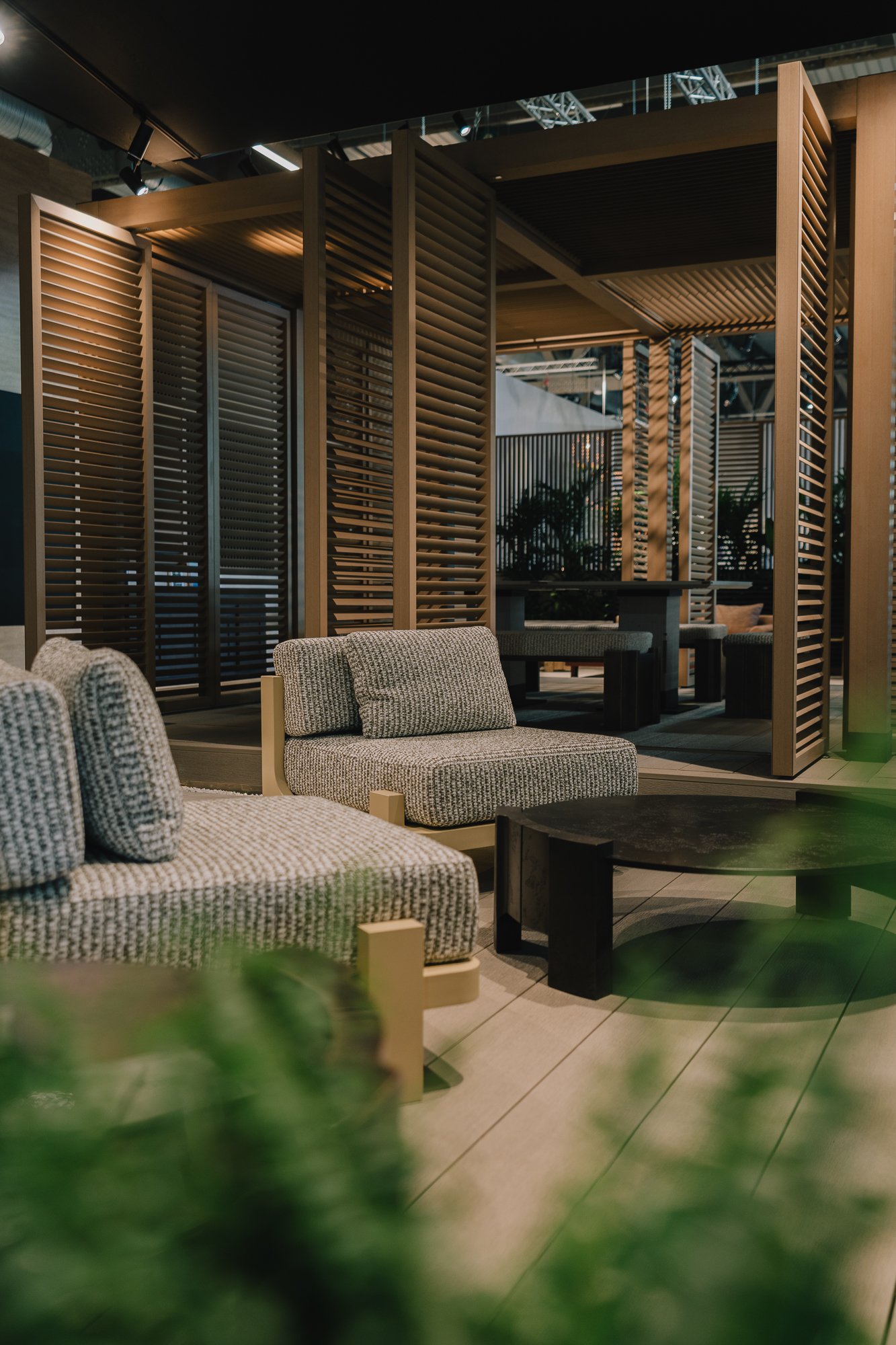
That philosophy is reinforced through OKHA’s debut of FORMA LENTA, a bespoke furniture collection developed for YARDCOM. Under the direction of Adam Court, the collection emphasizes grounded silhouettes, material restraint, and tactile continuity. The pieces are not designed to stand apart—they dissolve into the architectural language, reinforcing a cohesive spatial rhythm.
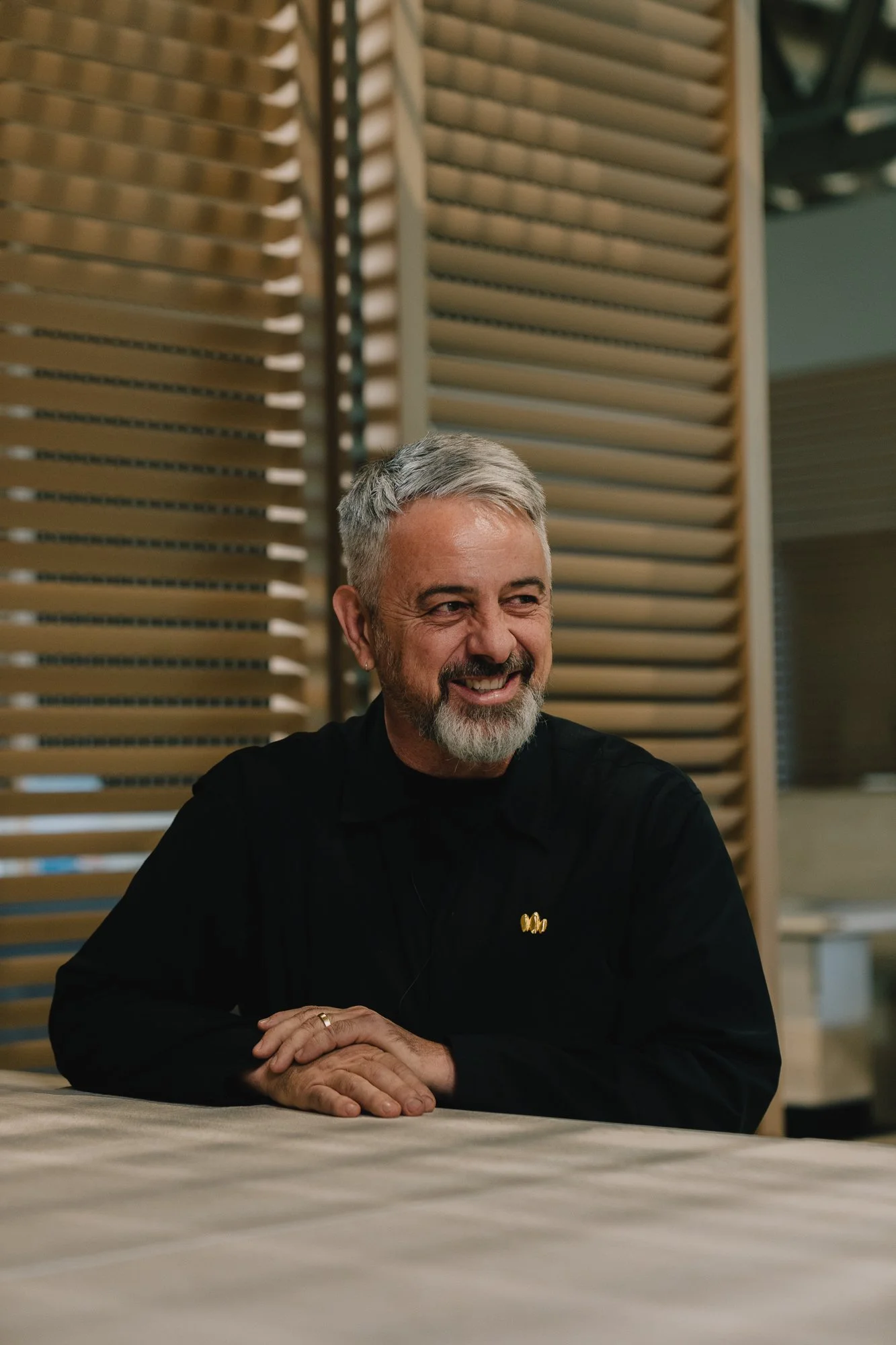
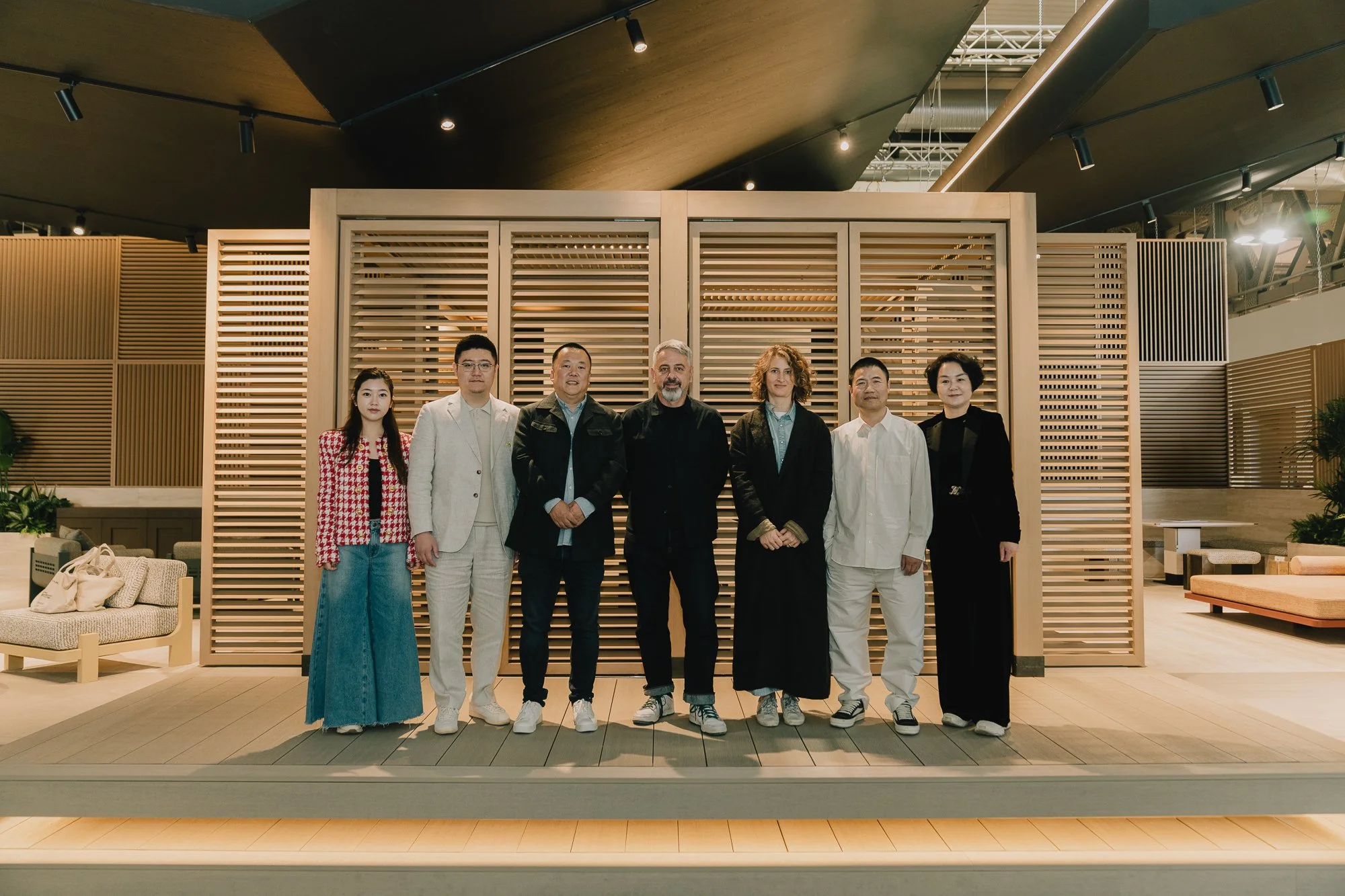
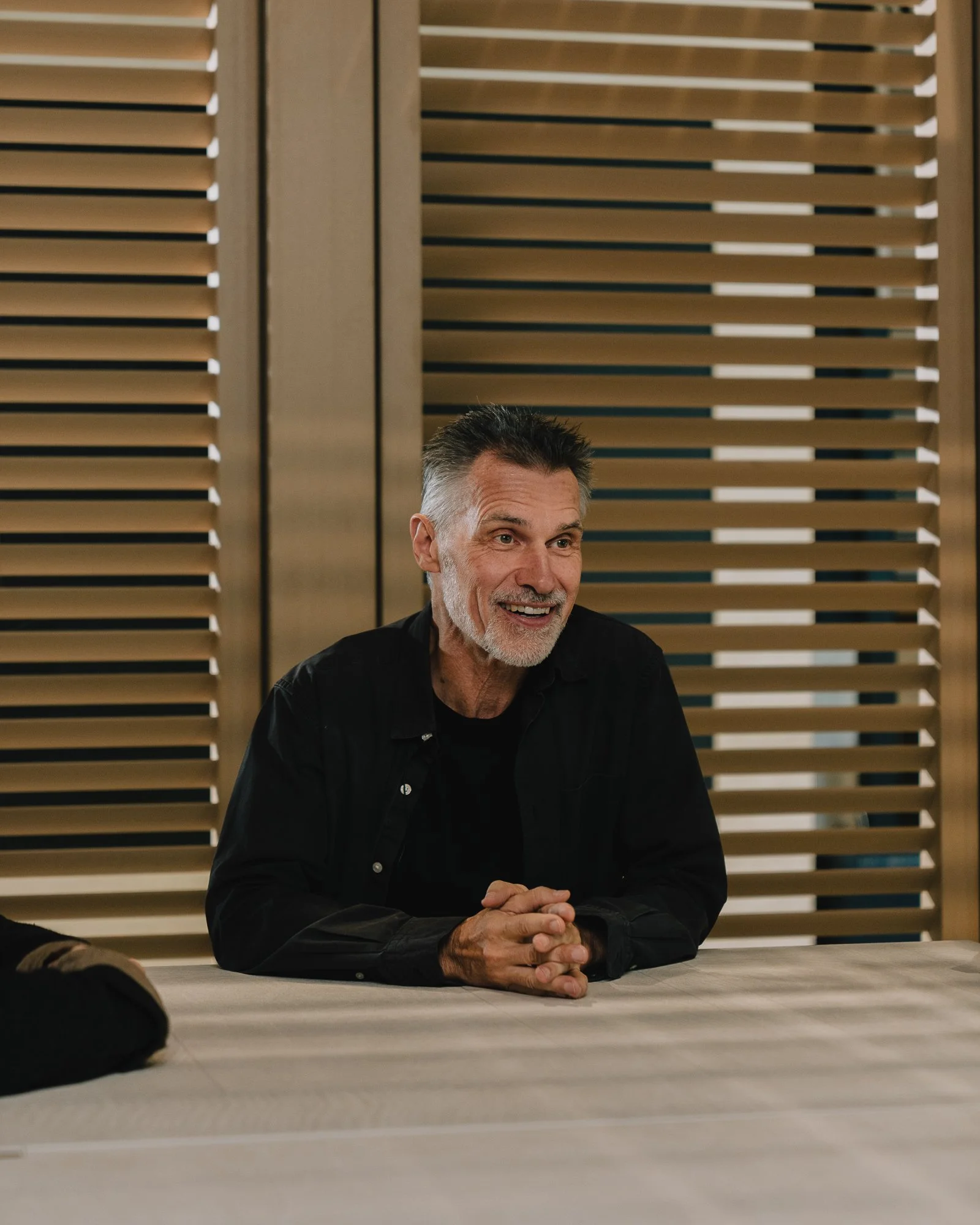
To contextualize the installation, SAOTA, OKHA, and YARDCOM convened a roundtable featuring SAOTA founders Stefan Antoni and Greg Truen, alongside interior designer Claudia Afshar and architect Peter Pichler. The discussion traced how principles of indoor–outdoor continuity—long embedded in South African architecture—have evolved into a globally relevant framework for wellbeing and connection.
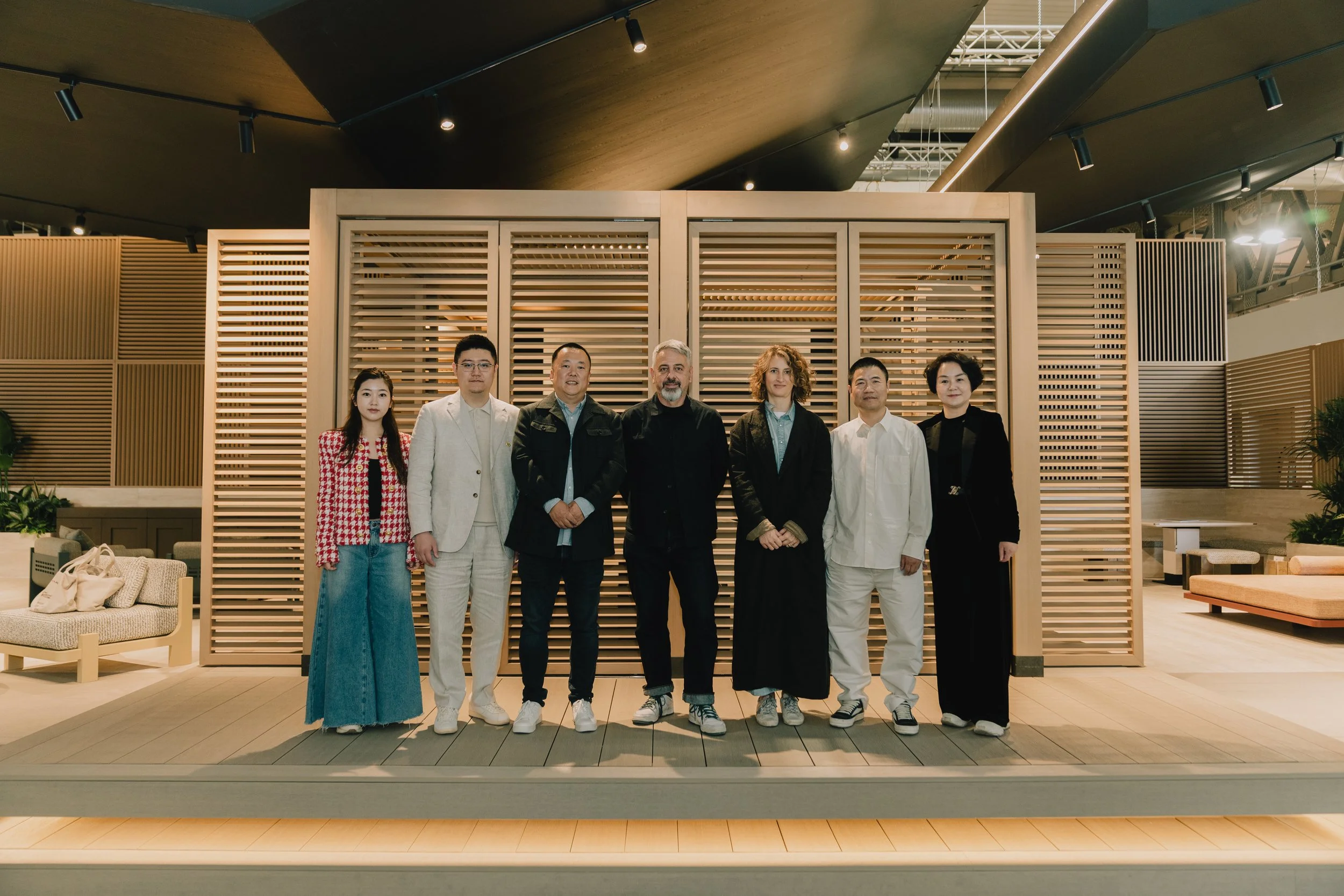
Antoni’s perspective positions architecture not as object-making, but as mediation: a discipline that orchestrates the relationship between people and environment. Truen extends this thinking across scale, from the intimacy of interior thresholds to the vastness of horizon lines—an approach that finds early expression in his residential project, Kloof House, where spatial boundaries dissolve into landscape.
What distinguishes SAOTA’s pavilion is its refusal to privilege any single discipline. Instead, it operates as a calibrated system—where architecture frames experience, furniture anchors it, and landscape completes it. In an era where design is increasingly driven by spectacle and singularity, this pavilion offers a quieter, more enduring proposition: integration as innovation.
The result is not just an installation, but a thesis. Rooted in a South African sensibility yet resonant on a global stage, SAOTA’s collaboration with OKHA and YARDCOM suggests that the next evolution of outdoor living will not be defined by objects, but by the spaces between them—and how those spaces shape the way we live.