A Neoclassical Palazzo Reborn: Casa Laveni Debuts in Milan’s Brera District
In a city where history is not preserved so much as continuously reinterpreted, a new chapter in design-led hospitality unfolds with the opening of Casa Laveni, a 30-room boutique property set within a restored neoclassical palazzo in Milan’s Brera district.
Once the private residence of engineer Giuseppe Laveni, the early-20th-century structure has been carefully reimagined by Delogu Architecture in collaboration with Studio Sacchi Architetti, under the ownership of investment platform Bohopo. The result is a calibrated exercise in architectural duality: one that preserves the rigor of Milan’s neoclassical language while introducing a quietly surreal contemporary sensibility.
Positioned just steps from Teatro alla Scala, the Duomo di Milano, and the Galleria Vittorio Emanuele II, Casa Laveni occupies a geographic and cultural threshold within Milan’s most storied design corridor. Yet its ambition is not proximity, but interpretation—how heritage can be reframed as lived experience.
“As Milan continues to assert itself as one of Europe’s most dynamic cultural capitals, Casa Laveni represents a new vanguard of hospitality,” said Minas Terlidis, co-founder and CEO of Bohopo. “Each moment feels distinctly Milanese yet subtly unexpected.”
That tension—between familiarity and abstraction—defines the property’s design philosophy. According to Francesco Delogu of Delogu Architecture, the project began with the building’s original identity as a private home. “We wanted to preserve that sense of domesticity while introducing a dreamlike layer,” he noted. The result is an interior language that oscillates between restraint and imagination.
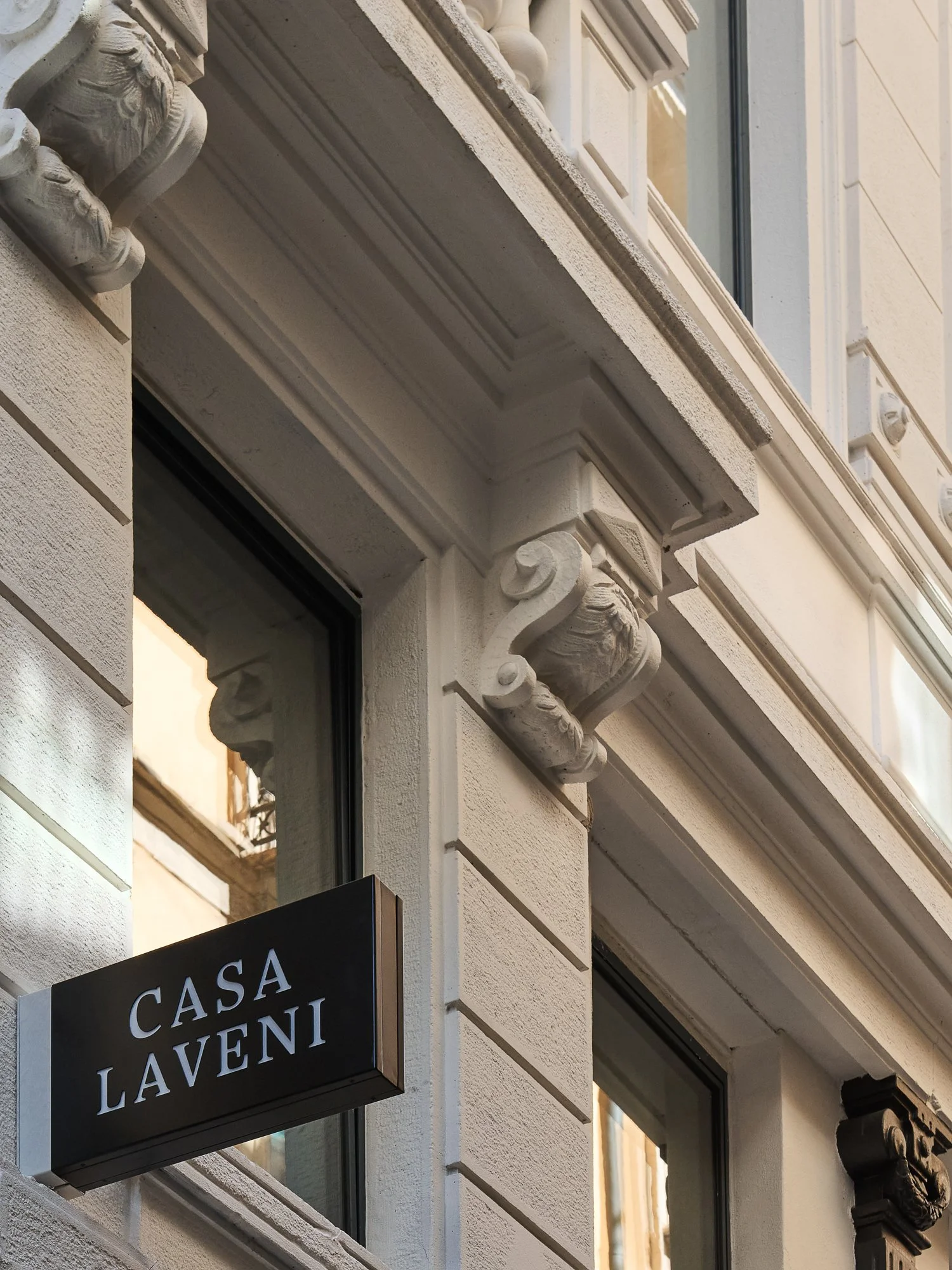
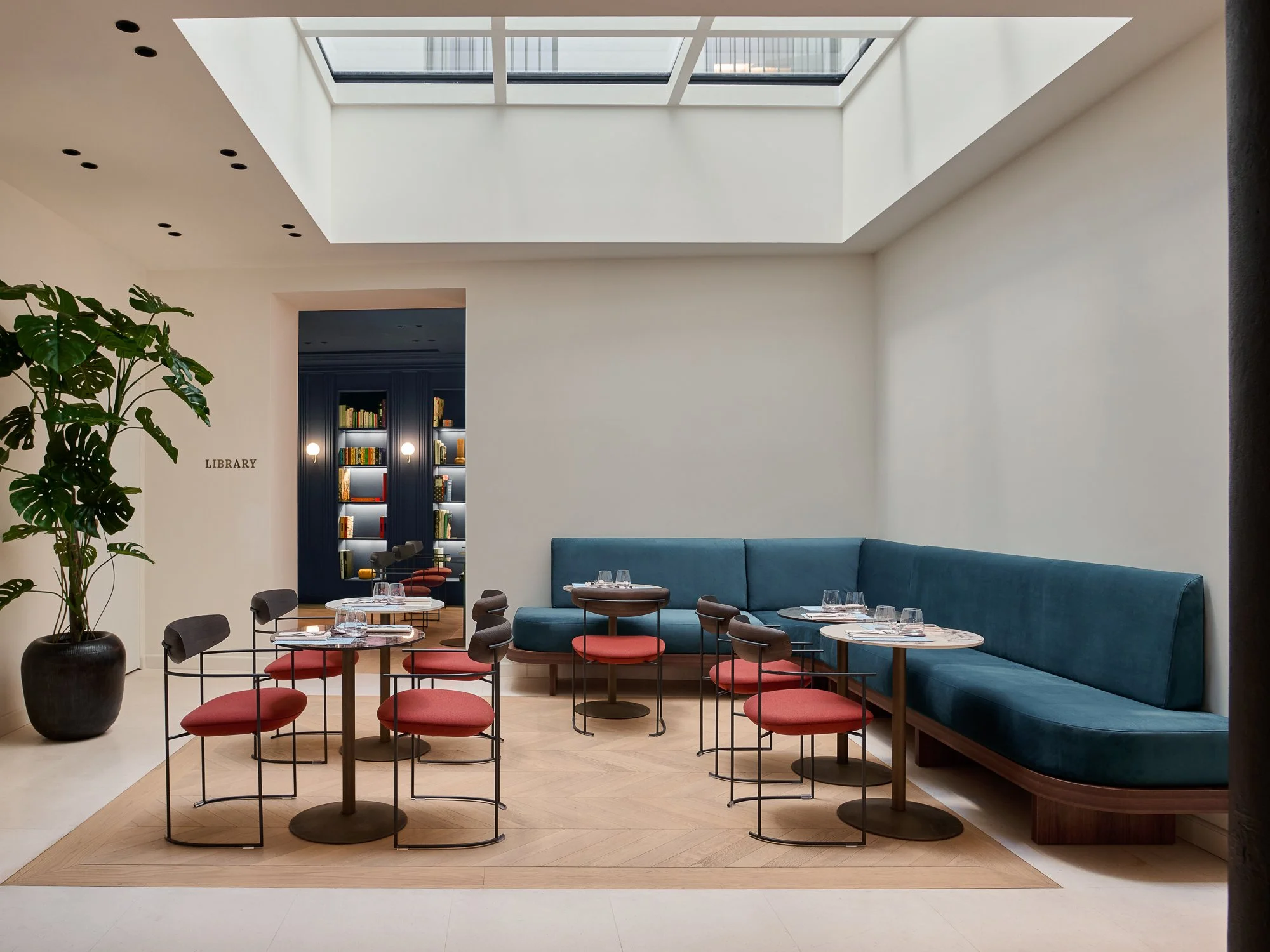
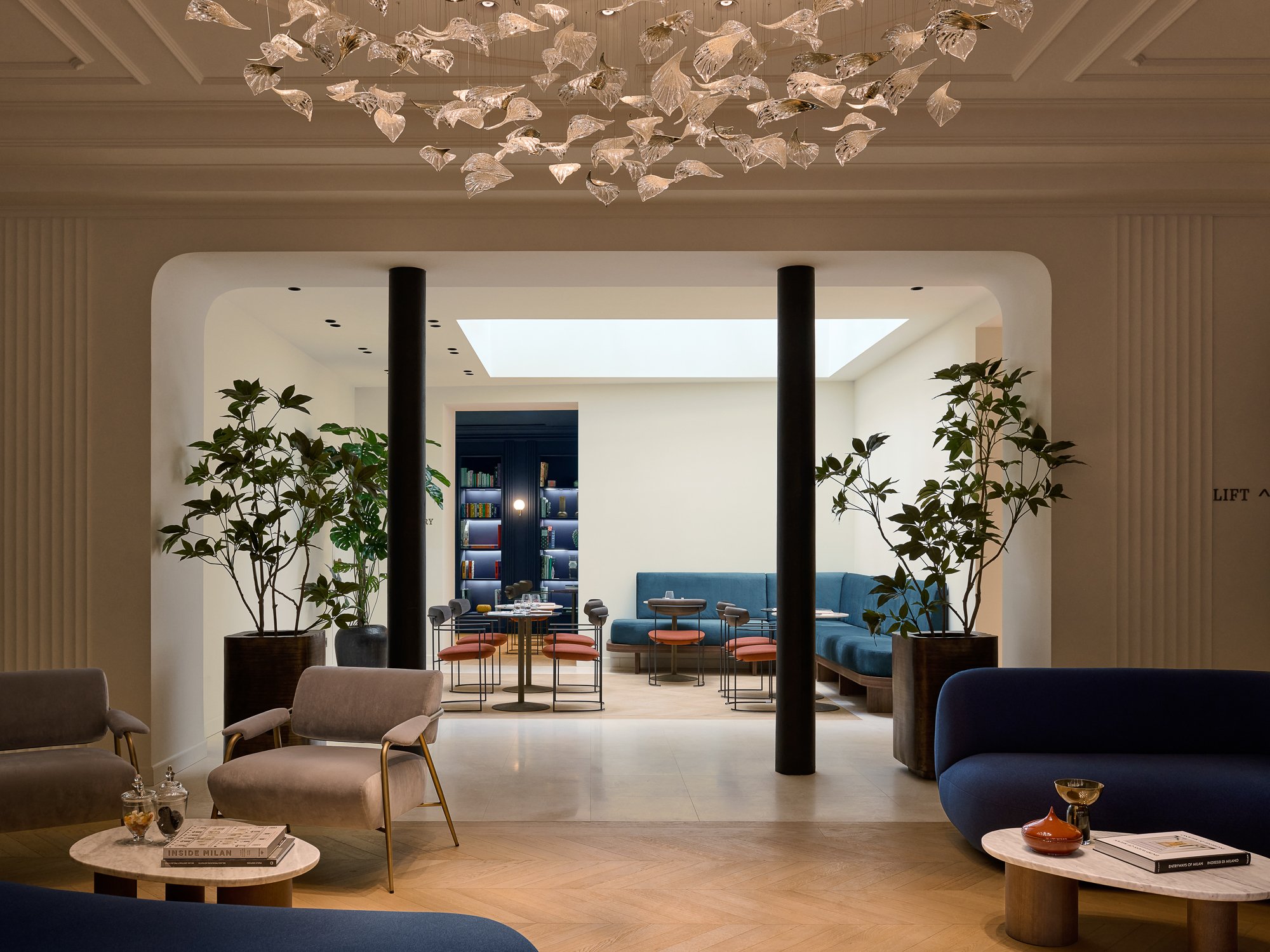
Across the building’s preserved façade, original cast-iron columns, and decorative cornices, Casa Laveni remains firmly anchored in Milan’s architectural canon. Inside, however, a softer narrative unfolds: sky-blue tonalities, sculptural furnishings, and bespoke interventions that blur the boundary between historical continuity and contemporary invention.
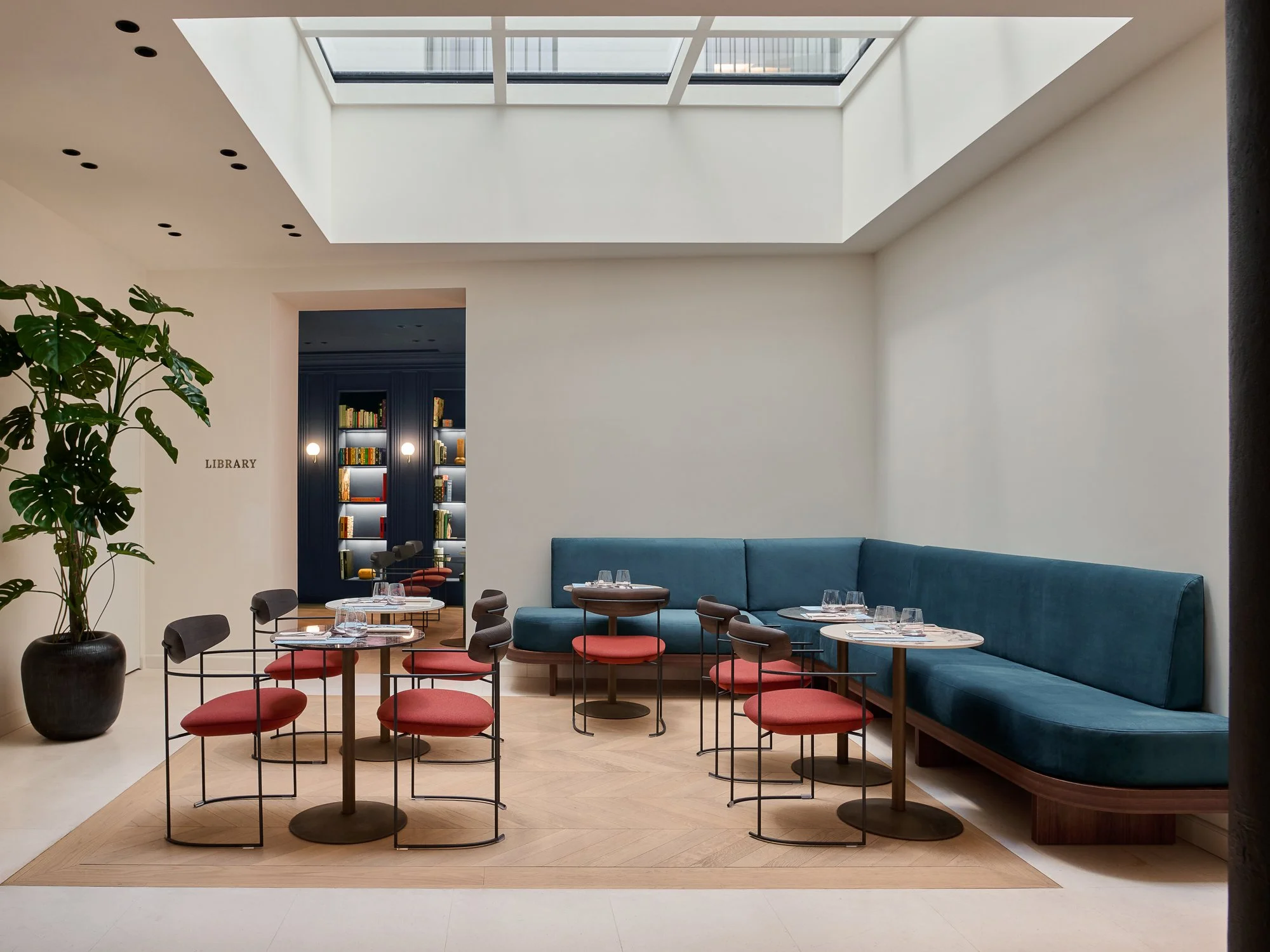
The public spaces are conceived less as hotel amenities and more as a sequence of domestic salons. At the center of the lobby, a sculptural installation of hand-blown crystal leaves—crafted by Bohemian artisans—introduces a refracted dialogue between craft traditions and modern luxury. Above, the restored skylight becomes both architectural device and atmospheric frame, filtering natural light into a controlled theatricality.
As evening arrives, the atmosphere shifts toward Milan’s aperitivo culture, with a self-service bar concept that dissolves the boundary between guest and local. Below ground, a compact wellness space extends the narrative inward, using natural woods, mirrored surfaces, and muted tones to emphasize stillness over spectacle.
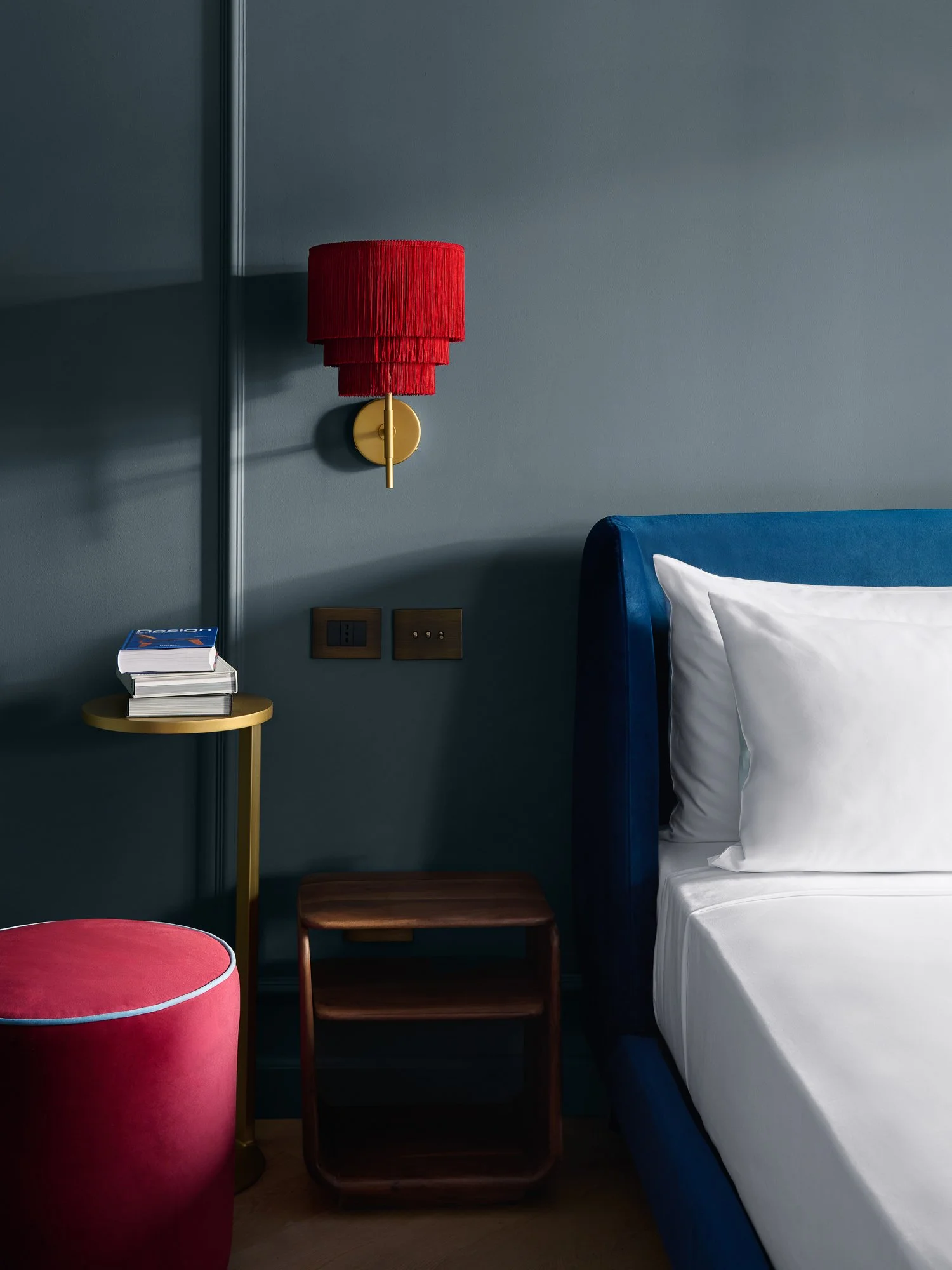
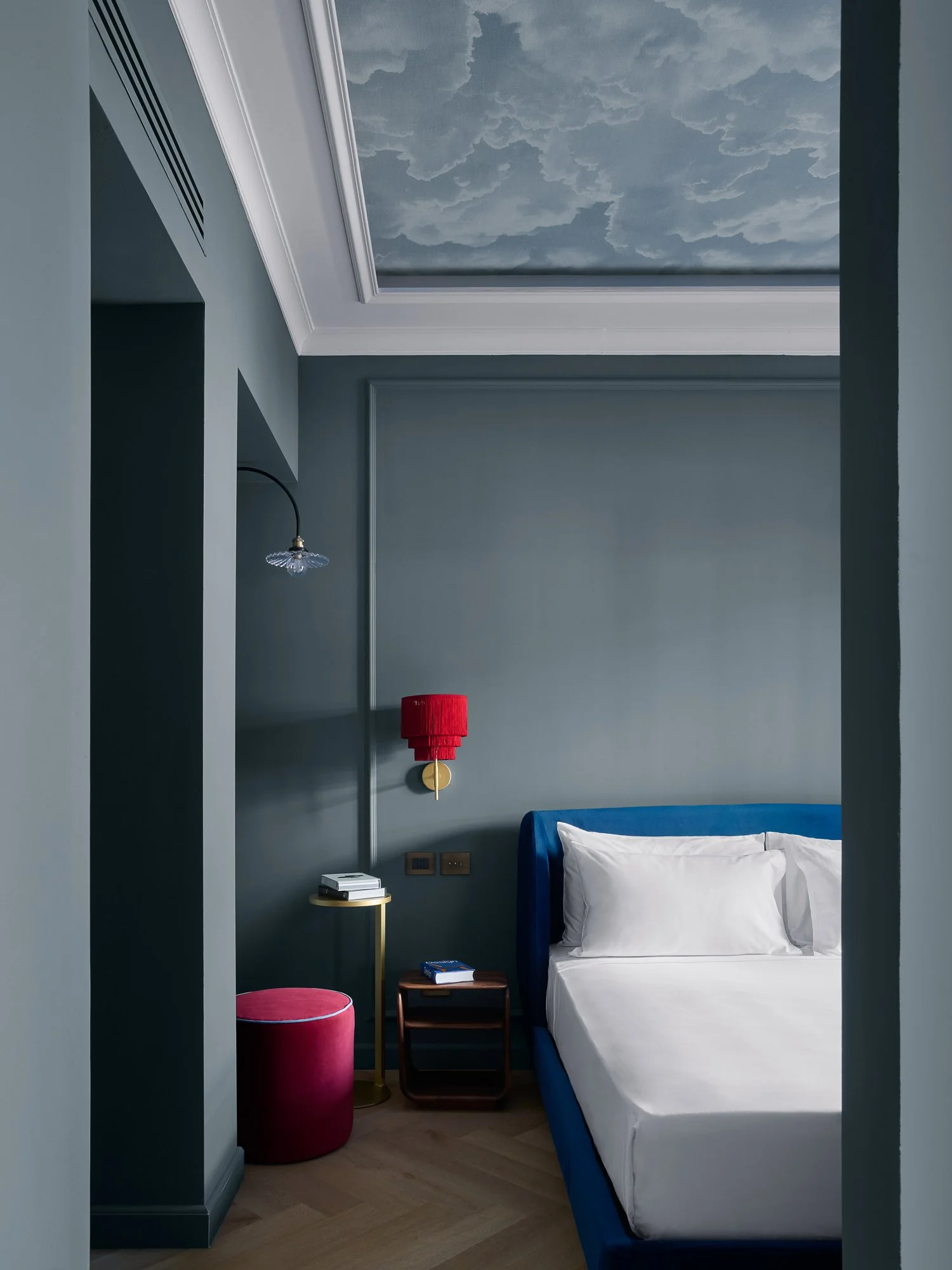
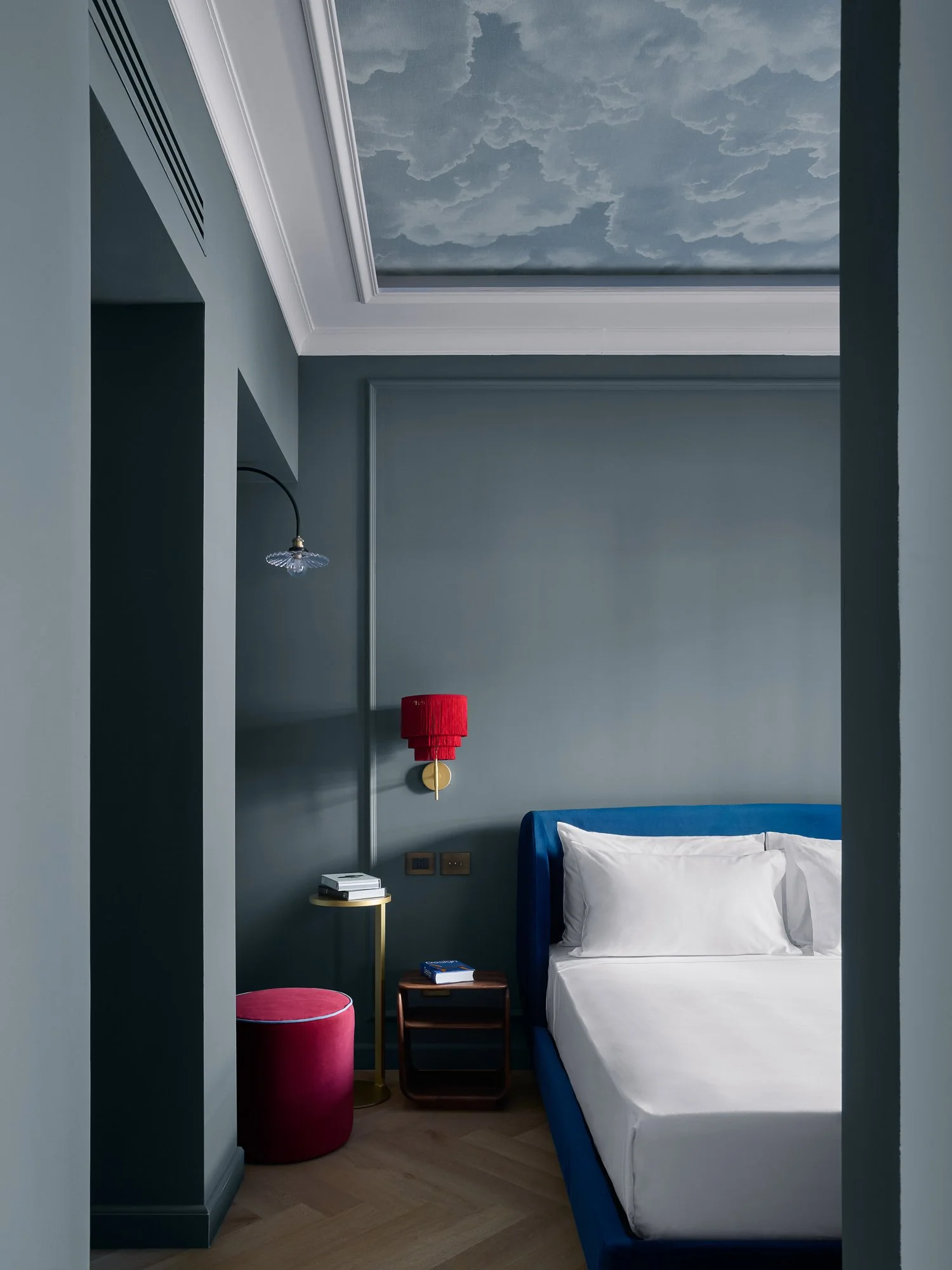
The 30 guest rooms continue this exploration of contrast. Overhead, cloud-adorned ceilings reinterpret Italian fresco traditions through a contemporary graphic lens, transforming each room into a subtle scenographic composition. Materials such as Carrara marble, brushed brass, and custom millwork are punctuated by moments of chromatic tension—crimson ottomans, sculptural lighting by Artemide and Martinelli Luce, and bespoke fixtures developed specifically for the project.
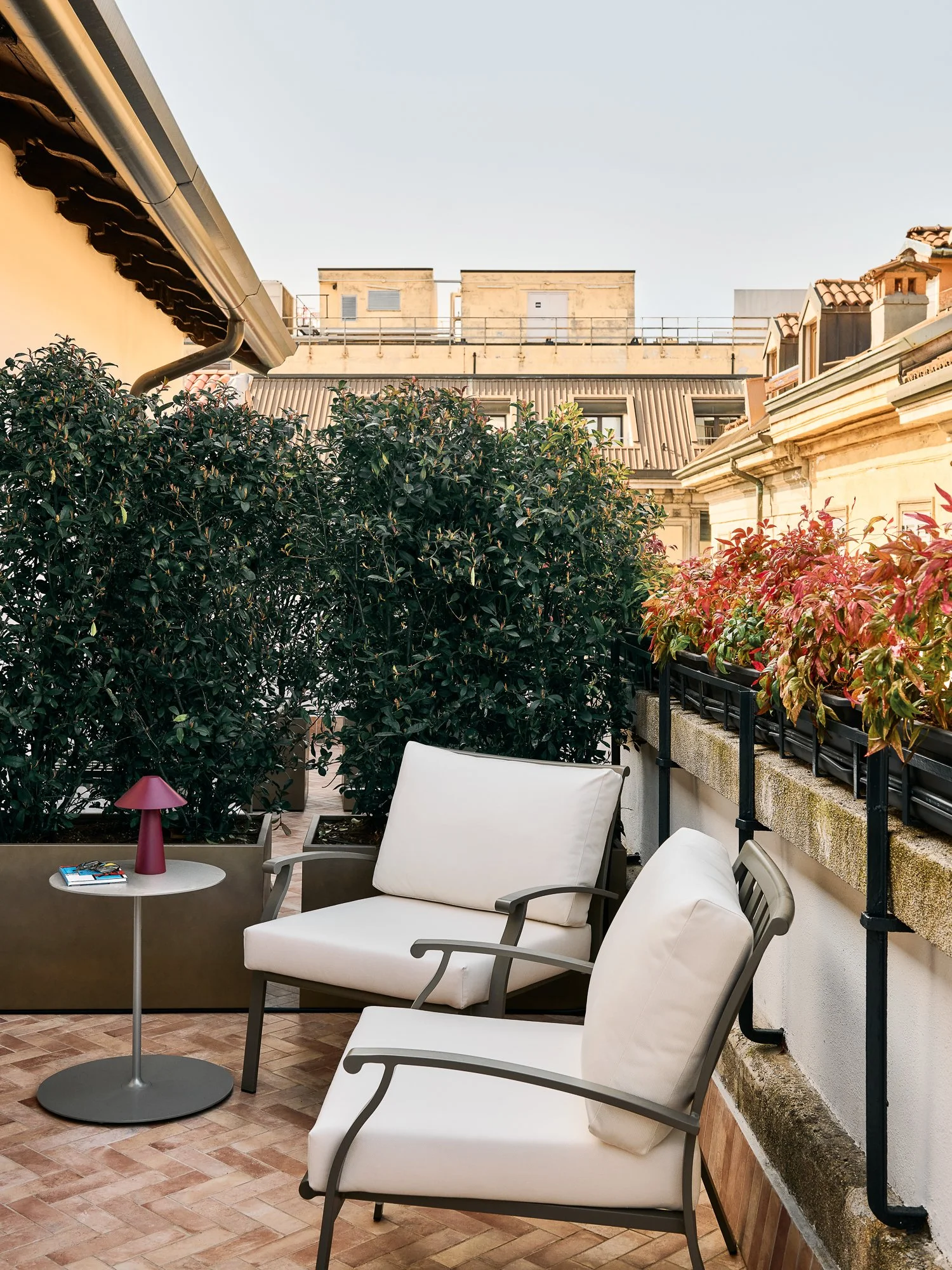
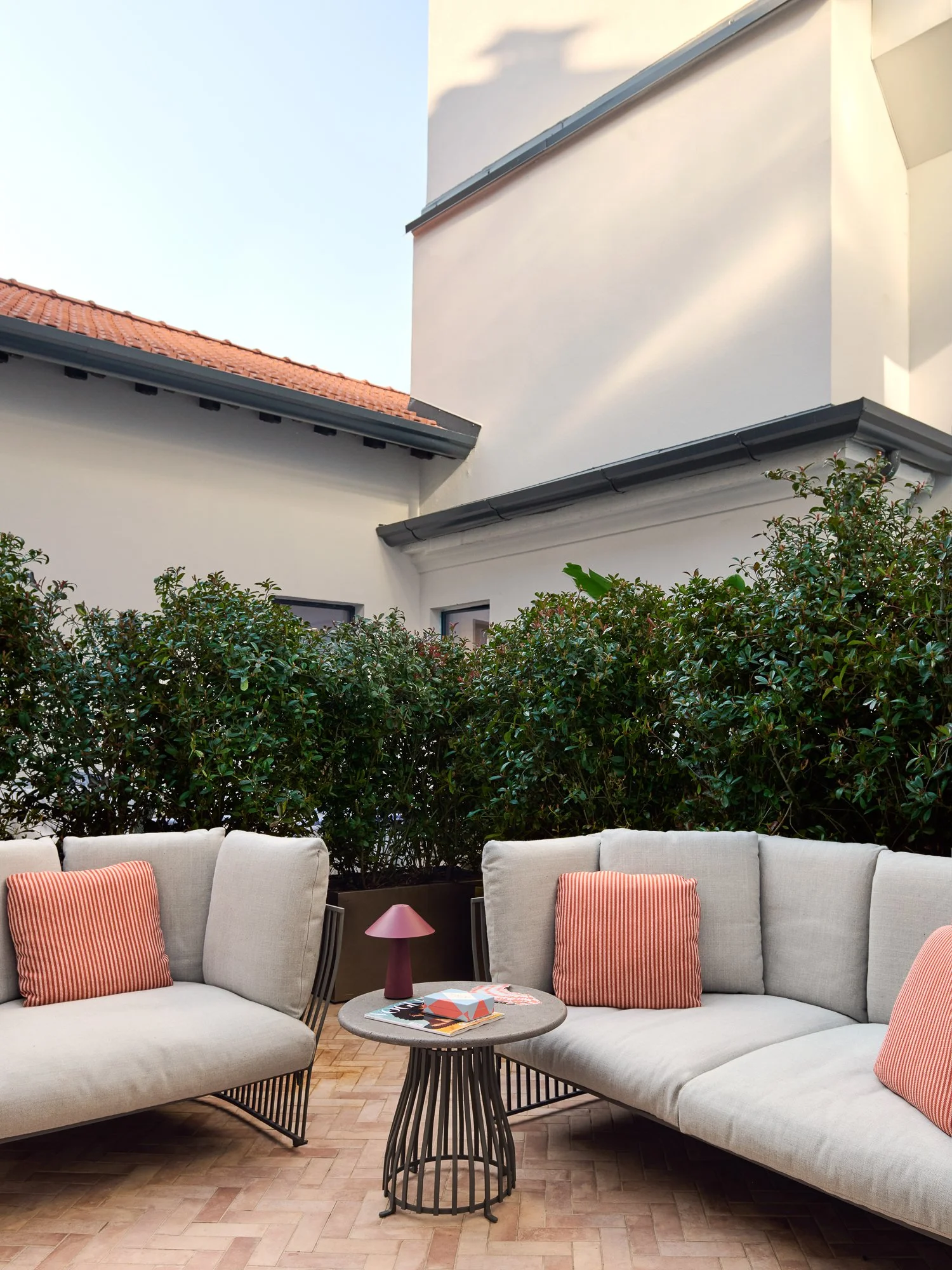
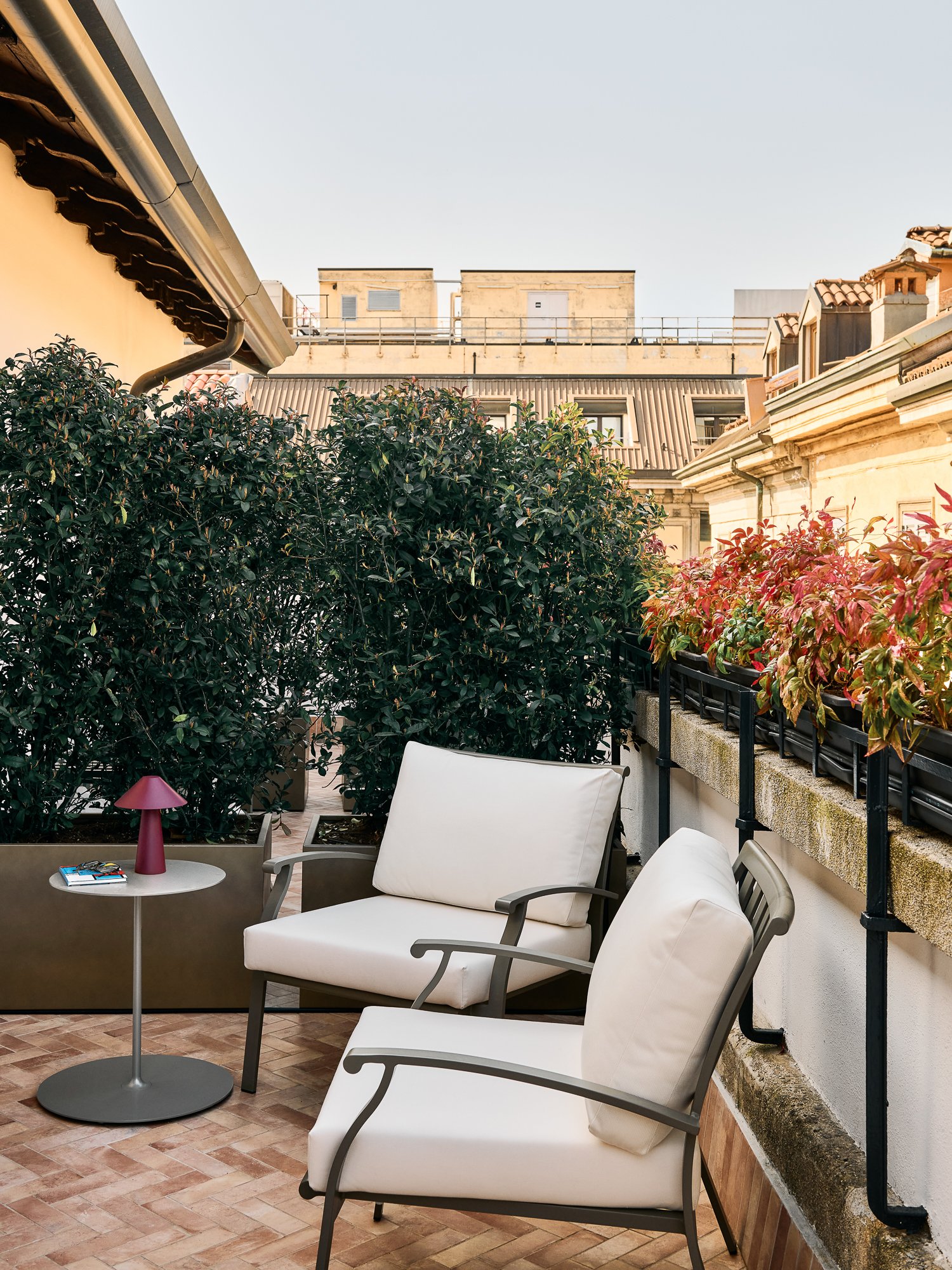
In select rooms, private terraces open onto Brera’s terracotta rooftops, extending the interior dialogue into the urban fabric of Brera District itself. The most intimate expression of the concept appears in The Suite, where a restored wooden truss ceiling frames a floating cloud motif above a freestanding bathtub—an architectural gesture that merges memory with fantasy.
Beyond hospitality, Casa Laveni positions itself as a cultural interlocutor. Through “LAVENI CURATES,” its street-facing windows become a rotating exhibition space for contemporary fashion and design, extending the hotel’s presence into the public realm and reinforcing its role within Milan’s creative ecosystem.
For Bohopo, Casa Laveni marks a strategic entry into Italy’s boutique hospitality landscape and a continuation of its broader European expansion model. But within the context of Milan, the project reads less as expansion and more as translation—an effort to convert architectural inheritance into contemporary cultural capital.
In a city where design is both heritage and currency, Casa Laveni does not seek to disrupt Milan’s rhythm. Instead, it quietly reframes it—one neoclassical room at a time.