
Latin America’s Electric Bus Revolution Hits 10,000 Vehicles, Signaling A New Era For Urban Mobility
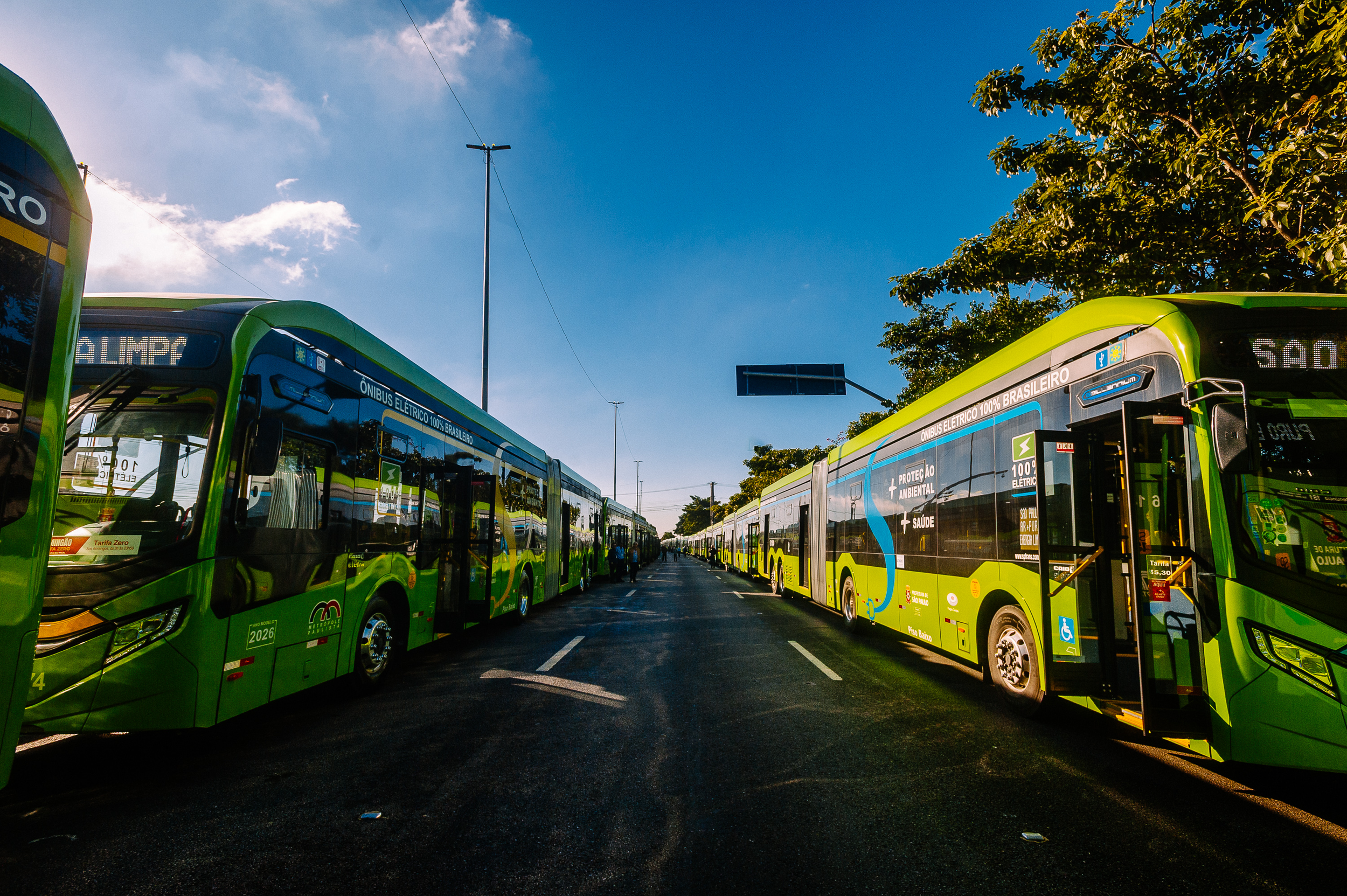
Latin America’s public transportation landscape is undergoing a consequential shift. Across more than 80 cities in 13 countries, electric buses are moving from pilot programs and isolated commitments to a meaningful part of everyday urban infrastructure. The region has now surpassed 10,000 electric buses in operation—a milestone that signals the accelerating transition toward cleaner, more efficient mobility.
The figure, announced during Lat.Bus 2026 in São Paulo by C40 Cities and the International Council on Clean Transportation (ICCT), represents more than a benchmark for electric mobility. Collectively, these buses are estimated to avoid more than 10 million tonnes of CO₂ emissions annually, while contributing to improved air quality and healthier urban environments.
At the center of that transformation are three cities: Santiago, São Paulo and Bogotá, which together account for more than 7,000 electric buses currently operating across the region. São Paulo, in particular, has emerged as a significant case study for how municipal policy, financing and infrastructure can turn electrification from an ambition into an operating reality.
In June, São Paulo added 500 electric buses in a single delivery, bringing its fleet to 1,759 vehicles. The city's electric fleet includes 1,570 battery-electric buses and 189 trolleybuses, making it the largest electric bus fleet in Brazil and the second-largest in Latin America.
The environmental implications are substantial. São Paulo's electric buses are estimated to prevent approximately 130,000 tonnes of CO₂ emissions each year while saving roughly 57 million liters of diesel. The city estimates that the environmental benefit is comparable to planting approximately 11 million trees.
But the more important story may be the financial architecture behind the fleet.
São Paulo structured an investment program worth approximately R$6.5 billion, combining national and international resources with participation from institutions including the Brazilian Development Bank, the World Bank and the Inter-American Development Bank. Since 2019, C40 Cities and the ICCT, through the ZEBRA Partnership and other partners, have worked with São Paulo and other Latin American cities to connect municipal governments, financial institutions and vehicle suppliers.
That infrastructure of collaboration matters because the biggest obstacle to electric-bus adoption is rarely the technology itself. For many municipalities, it is the upfront cost of replacing established diesel fleets, building charging infrastructure and restructuring transportation systems around a different energy model.
“Reaching 10,000 electric buses in operation shows that the transition to zero-emission transport is no longer a promise but a reality in Latin American cities,” says Ilan Cuperstein, C40 Cities Regional Director for Latin America. “Financing does not have to be a barrier. Tested pathways exist, and the network is ready to support those willing to take them.”
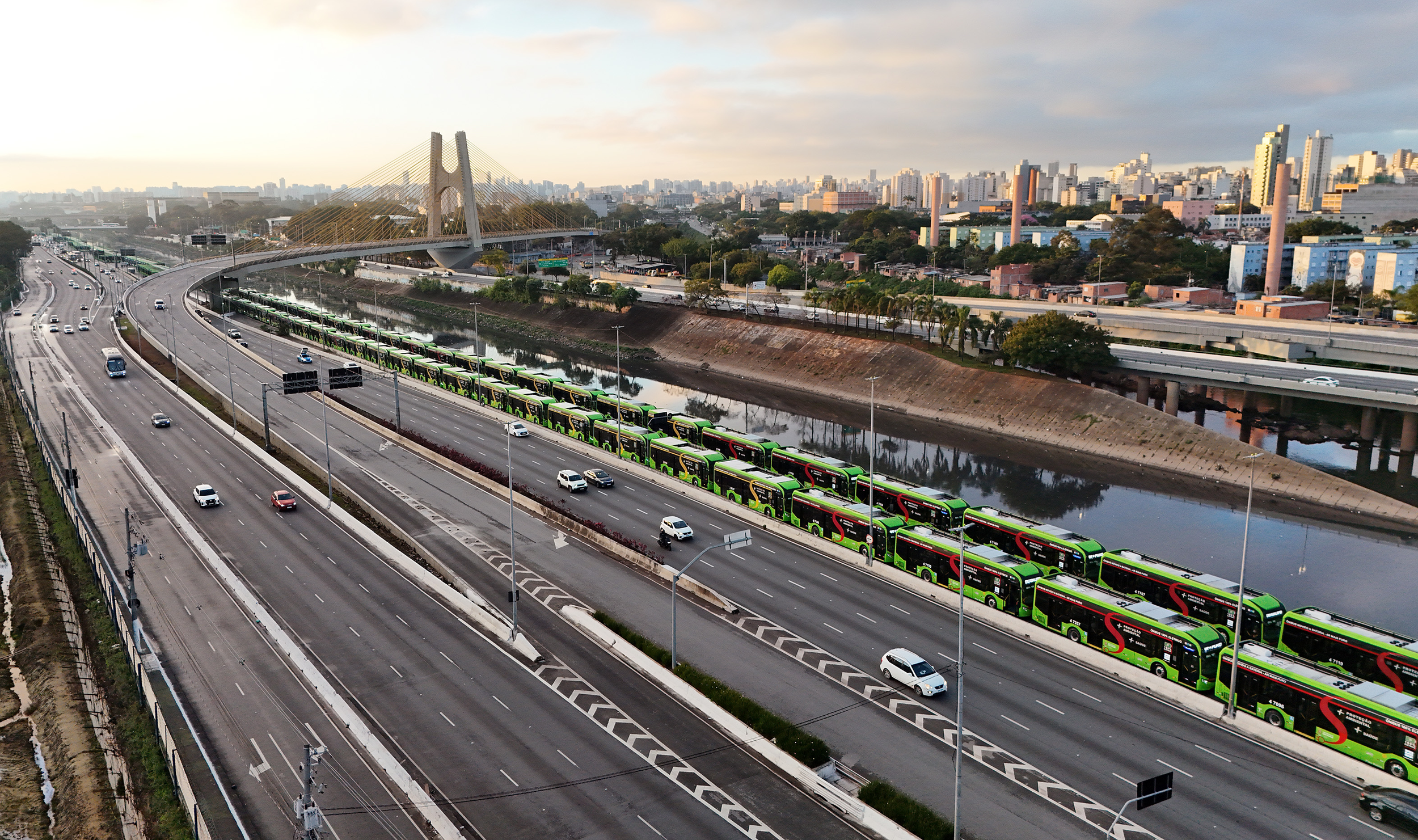
São Paulo has also embedded electrification into public policy. Under municipal regulations, operators can no longer replace buses reaching the end of their useful life with new diesel vehicles, creating a structural incentive for the fleet to progressively move toward low- and zero-emission technologies. The system serves more than seven million passengers each day.
The approach is increasingly being replicated elsewhere in Brazil.
In Salvador, efforts are underway to electrify at least half of the city's BRT fleet. Rio de Janeiro is preparing terminals for future electric buses through studies covering charging infrastructure, financial modeling and project development. In Recife, a R$319 million federal investment is supporting the purchase of 100 electric buses and charging infrastructure for the metropolitan region.
Belo Horizonte is taking a different but equally important step: building the infrastructure required before its first large-scale deployment of electric buses. Twenty-seven chargers are being commissioned at city bus depots, enabling the operation of approximately 100 electric buses.
Taken together, these projects reveal a broader shift in the way cities are approaching electrification. The transition is no longer simply about purchasing electric vehicles. It is about creating the financing mechanisms, regulatory frameworks, charging networks and institutional partnerships necessary to make zero-emission transportation scalable.
That distinction could prove critical as Latin American cities contend with rapid urbanization, air pollution and the rising pressure to decarbonize transportation.
The 10,000-bus milestone therefore represents both an achievement and a starting point. Santiago, São Paulo and Bogotá have demonstrated that large electric fleets can operate at scale, while cities across Brazil and the wider region are developing models for what comes next.
For Latin America, the electric bus is becoming more than a symbol of climate ambition. It is becoming part of the infrastructure of the modern city.
