
Envac’s Expanding Underground Infrastructure Signals A New Era For Circular Cities
As cities confront the accelerating pressures of climate volatility, population density, and aging infrastructure, waste management is emerging as one of the defining systems challenges of urban development. According to UNEP and ISWA’s Global Waste Management Outlook, municipal solid waste generation is expected to approach 3.8 billion tonnes annually by 2050 — a figure that reframes waste not as a peripheral sanitation issue, but as a central pillar of environmental resilience and economic sustainability.
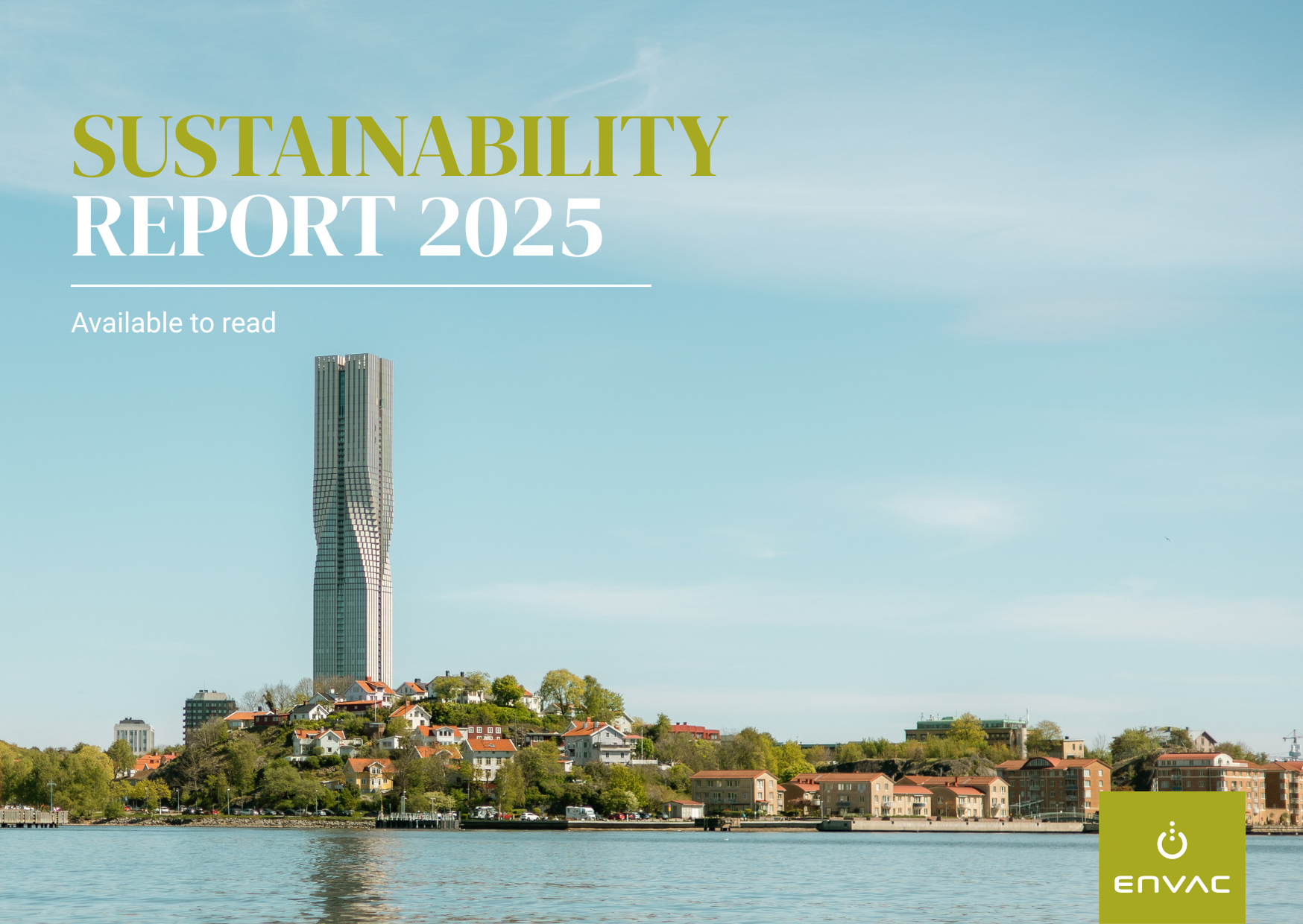
Against that backdrop, Swedish waste collection innovator Envac Group has released its Sustainability Report 2025, revealing that its automated underground waste systems now serve 7.4 million daily users across more than 1,300 installations in 40 countries. The report positions Envac’s infrastructure as part of a broader transition toward circular urban systems, where waste collection, energy efficiency, and behavioral data increasingly intersect.
At a moment when ESG accountability is becoming inseparable from city planning, Envac’s latest figures suggest that the future of waste management may look less like fleets of trucks navigating crowded streets and more like invisible networks operating beneath them.

The company’s underground vacuum collection systems transport waste through sealed pipe networks directly to centralized collection stations, reducing the dependence on conventional truck-based collection. In dense urban environments, the impact is measurable. Envac reports that collection-vehicle emissions can be reduced by up to 90% compared to traditional multi-stop waste pickup systems, while certain installations have demonstrated facility energy use reductions of up to 70%.
Yet the larger conversation extends beyond emissions alone. The company’s Double Materiality Assessment — increasingly common within evolving EU sustainability reporting frameworks — identifies resilience as a defining factor in future urban infrastructure. In practice, this means systems capable of maintaining operations during environmental disruption, labor shortages, or transportation interruptions.
Few examples illustrate that longevity more clearly than Roosevelt Island, where an Envac system installed in 1975 continues to process approximately 2,555 tonnes of waste annually for nearly 14,000 residents. The network remained operational during both Hurricane Sandy and severe snowstorms, reinforcing the argument that resilient waste systems are no longer optional components of modern urban planning.
Airports and healthcare institutions are also becoming proving grounds for this type of infrastructure. At Venice Marco Polo Airport, underground waste collection has eliminated internal transport vehicles while reducing annual CO₂ emissions by roughly six tonnes, supporting the airport’s broader 2030 net-zero ambitions. Meanwhile, at CHU University Hospital of Rennes, integrated waste and laundry systems have helped reduce infection risks and manual handling in clinical environments where operational reliability carries heightened stakes.
Historic city centers are also increasingly part of the conversation. In Bergen, Envac’s underground systems have been recognized by organizations including the World Economic Forum for reducing truck congestion while preserving the livability and architectural integrity of heritage districts. The appeal is not simply aesthetic; it reflects a growing consensus that urban sustainability must coexist with cultural preservation and public health.

“If we want cities to thrive, we must dare to rethink them,” said Naznoush Habashian. “Scaling up proven solutions and retrofitting dense urban areas is no longer optional — it’s urgent.”
That urgency is also shaping how cities think about circularity itself. Envac’s systems are increasingly designed to support source separation at scale, using multi-fraction collection and color-coded sorting methods that improve recovery rates for food waste, plastics, paper, metals, and glass. Organic waste streams can then be redirected into biogas or bio-fertilizer production, while combustible waste contributes to district heating and energy generation.
The integration of digital platforms further expands that ecosystem. Envac’s ReFlow application uses real-time resident data to guide sorting behavior and reduce residual waste generation, effectively transforming recycling participation into a measurable urban metric. The company reports that 17,000 apartments are currently connected to ReFlow-enabled systems, with ambitions to exceed 100,000 by 2027.
Operationally, the company’s ESG metrics also reflect a broader industrial shift toward automation-led efficiency. Envac’s EAP4 automation platform has reportedly reduced power consumption by up to 70% at benchmarked sites through demand-based operations and peak shaving technologies. At the same time, the company is targeting a reduction in energy consumption from 174 kWh per tonne today to below 50 kWh per tonne by 2030.
Social and governance indicators suggest similar alignment. Envac reported a Lost Time Injury Rate of 0.8 in 2025, continuing a multi-year decline as automation and QHSE standards mature across installations. End-user satisfaction across six countries averaged 4.09 out of 5, while both employee and key supplier compliance with the company’s Code of Conduct reached 100%.
What ultimately distinguishes the conversation around Envac is that it reframes waste infrastructure as a visible component of urban intelligence rather than an invisible municipal afterthought. As cities increasingly compete on sustainability performance, livability, and climate resilience, underground automated waste systems may become as strategically important as transportation, energy, or telecommunications networks.
The future of urban infrastructure may not be defined solely by what cities build above ground, but by the systems quietly operating beneath them.
