Marc Ange Reimagines Furniture As Emotional Architecture At Milan Design Week 2026
At Salone del Mobile 2026, where design increasingly straddles the line between collectible art and functional object, Marc Ange returns with a proposition that feels less like a collection and more like a thesis. Presented in collaboration with Visionnaire, his latest body of work reframes furniture not as utility, but as what he describes—implicitly and materially—as emotional architecture.
Unveiled at the Visionnaire Milano showroom from April 21 to April 26, the collection builds on Ange’s earlier Pavone series, extending his ongoing dialogue with the brand into a more sculptural and psychologically resonant territory. Where Pavone flirted with theatricality, this new trilogy—Fantino, Macrodosing, and Sfogliatella—leans into ambiguity, exploring the emotional weight objects can carry when freed from strict typology.
Each piece exists in a liminal space: between design and sculpture, intimacy and monumentality, instinct and intention. The result is a collection that resists immediate categorization, instead inviting a slower, more introspective form of engagement.
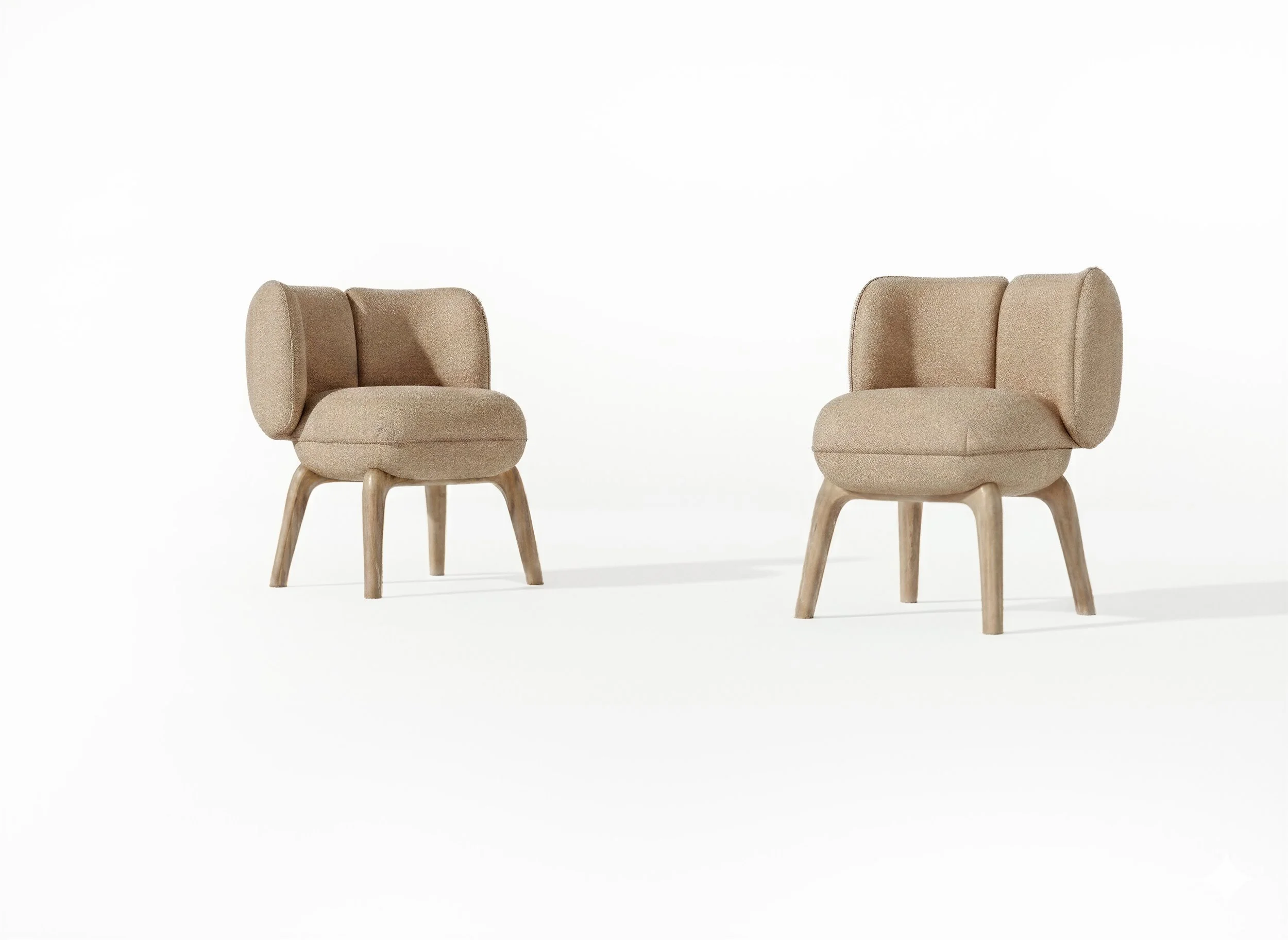
Fantino, a seating object, is perhaps the most instinctive of the three. Its curved, almost primordial volumes extend outward and behind the body, forming what reads less as a backrest and more as a protective gesture. There’s a psychological familiarity embedded in its silhouette—something that recalls childhood forms and subconscious memory—yet its scale and weight anchor it firmly in the present. It is both refuge and presence, soft in its invitation but grounded in its mass.
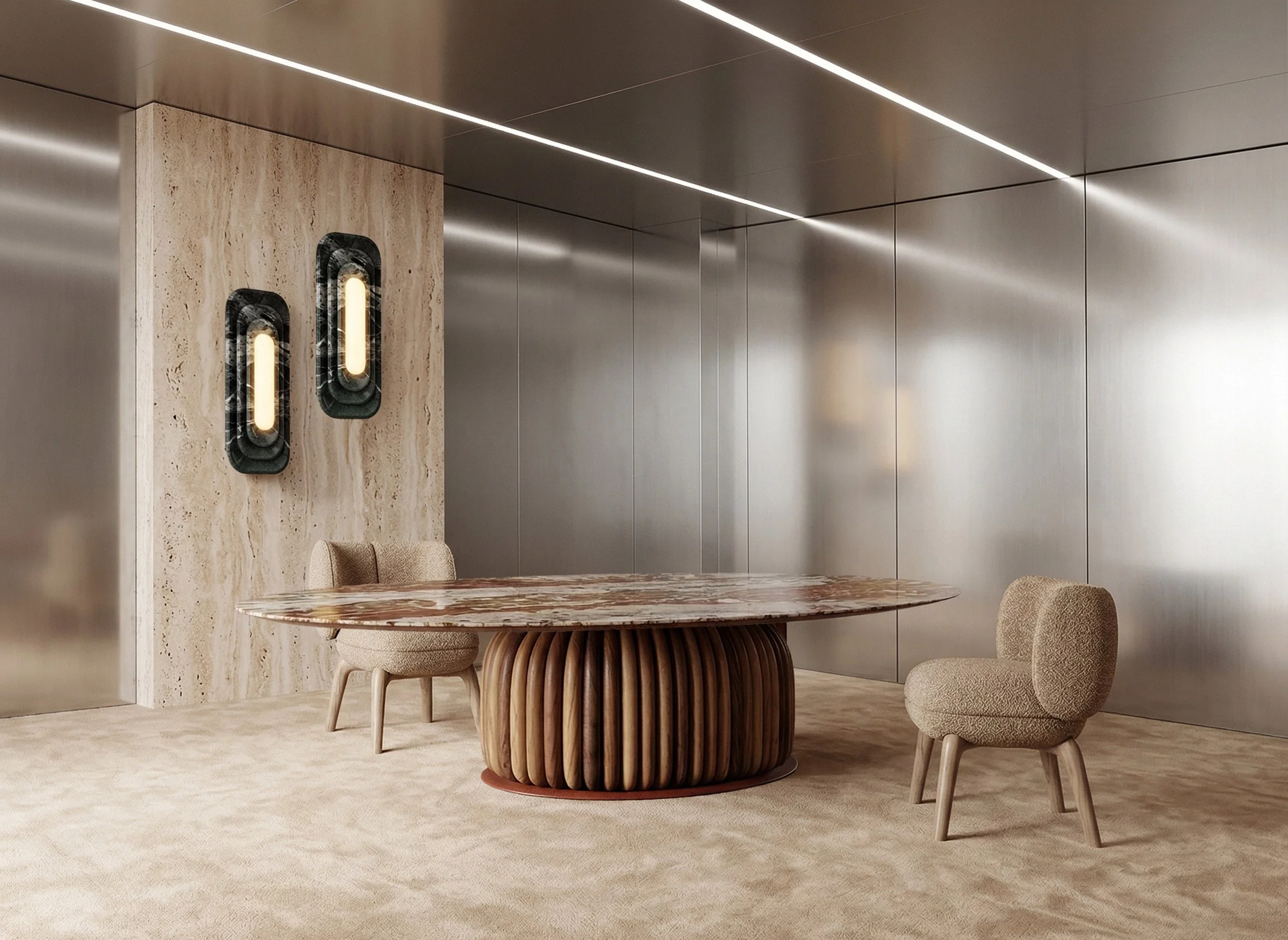
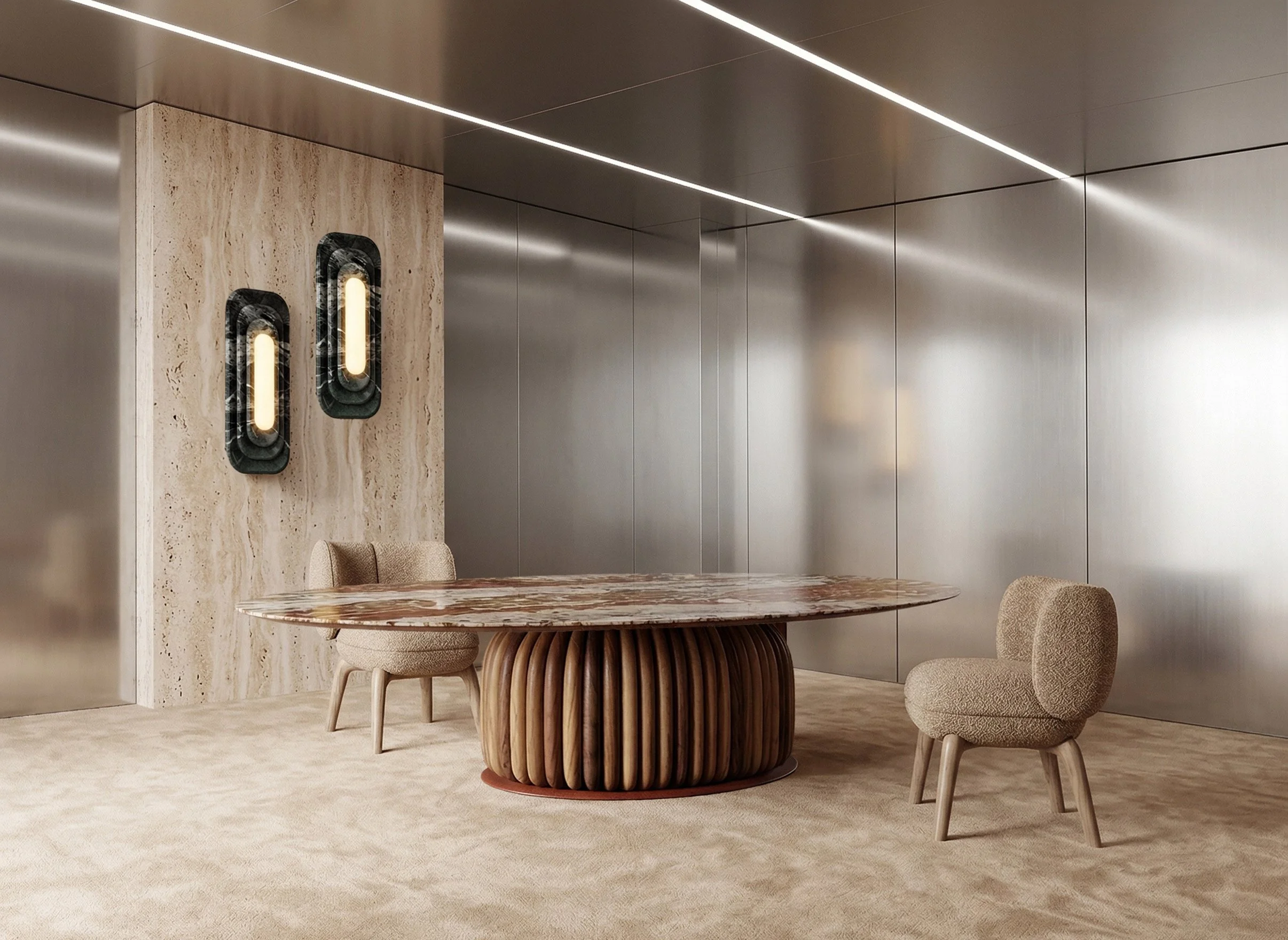
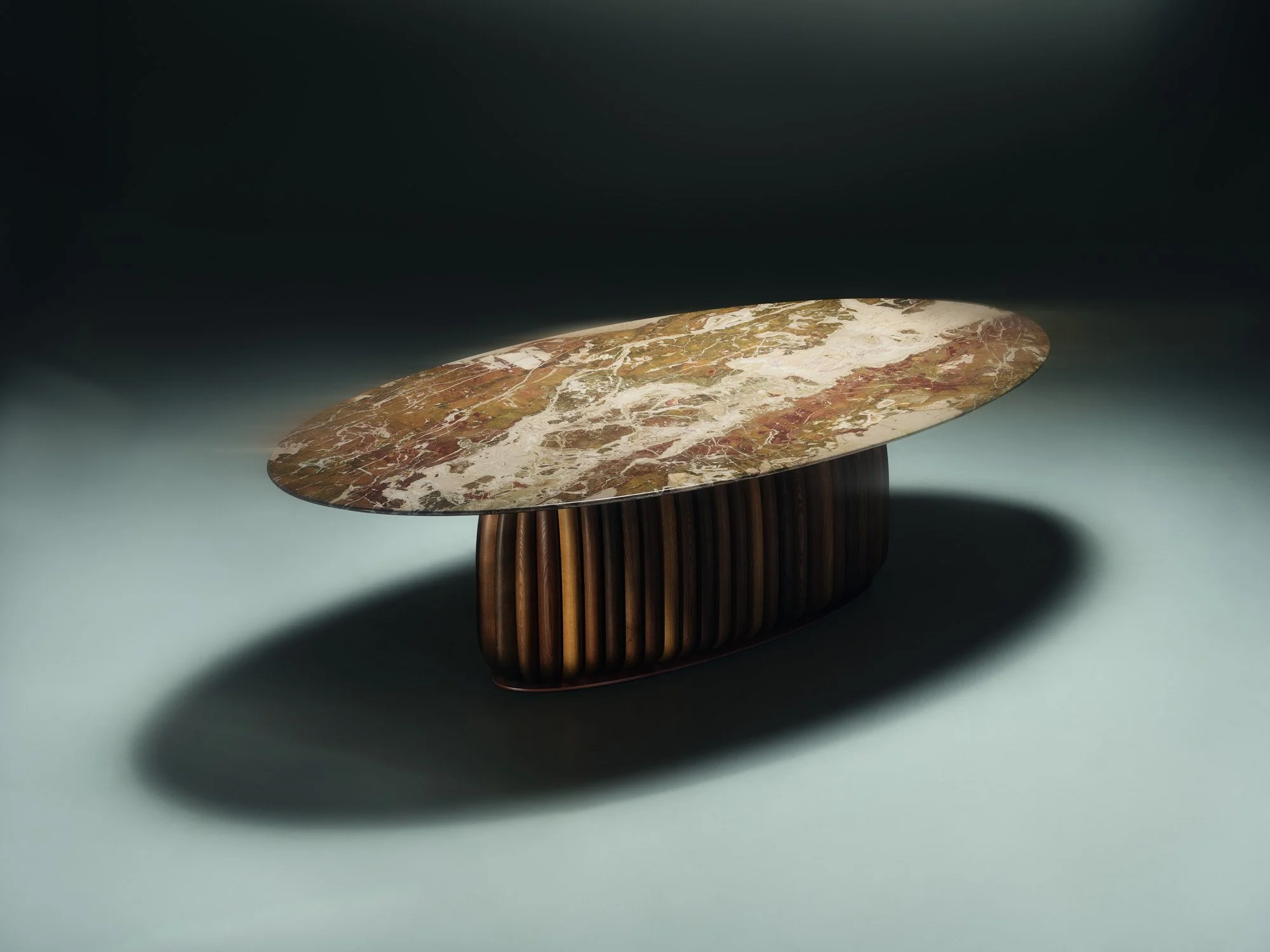
If Fantino is about protection, Macrodosing introduces tension. Conceived as a dining table, the piece abstracts the duality of the mushroom—simultaneously nourishing and intoxicating, organic yet otherworldly. A dense vertical structure composed of rhythmic wooden ribs rises from the ground, supporting a wide stone surface that unfolds like a canopy. The table doesn’t simply occupy space; it commands it. And yet, there’s restraint in its execution—a quiet strength that allows its more enigmatic qualities to surface over time.
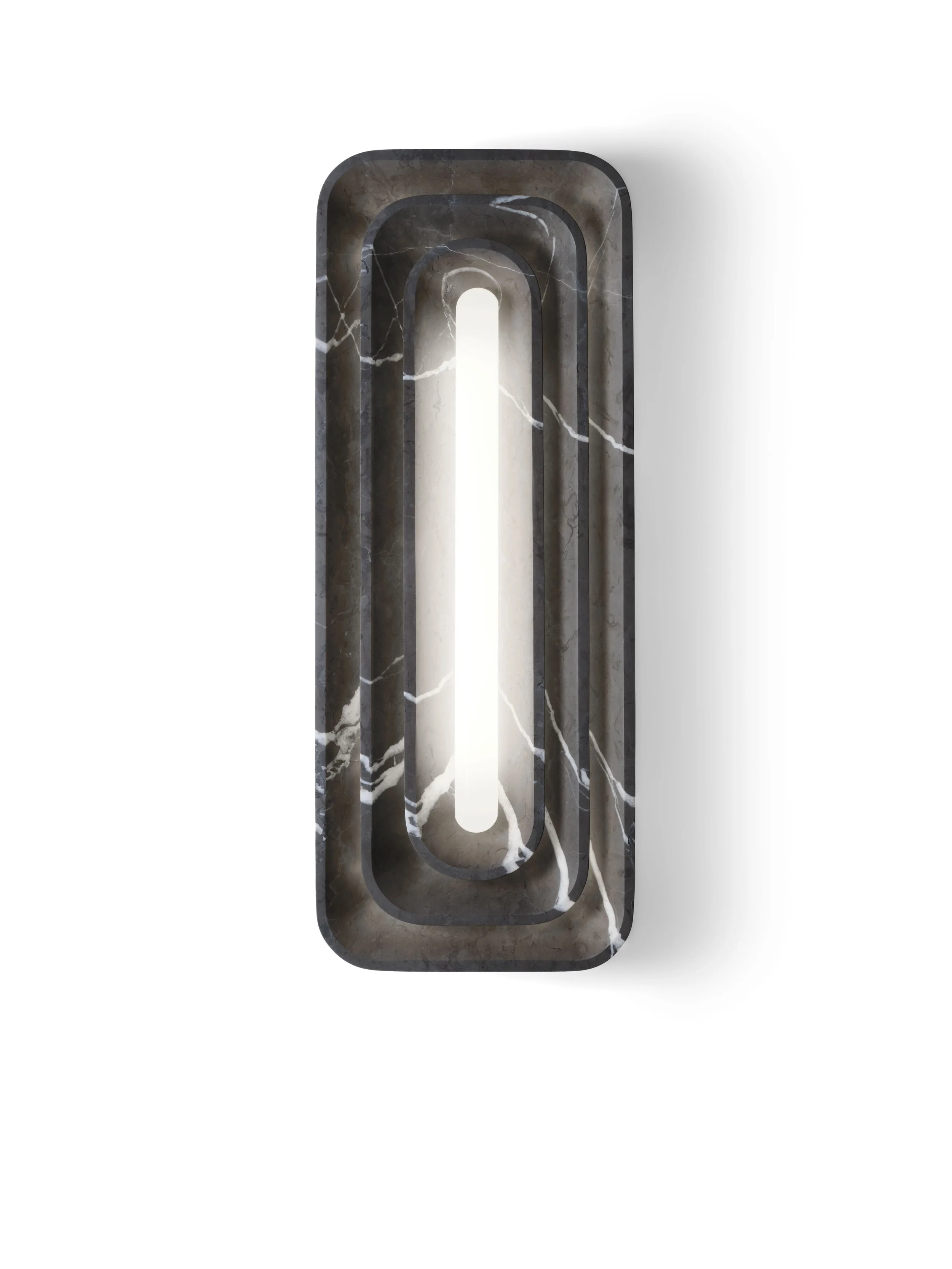
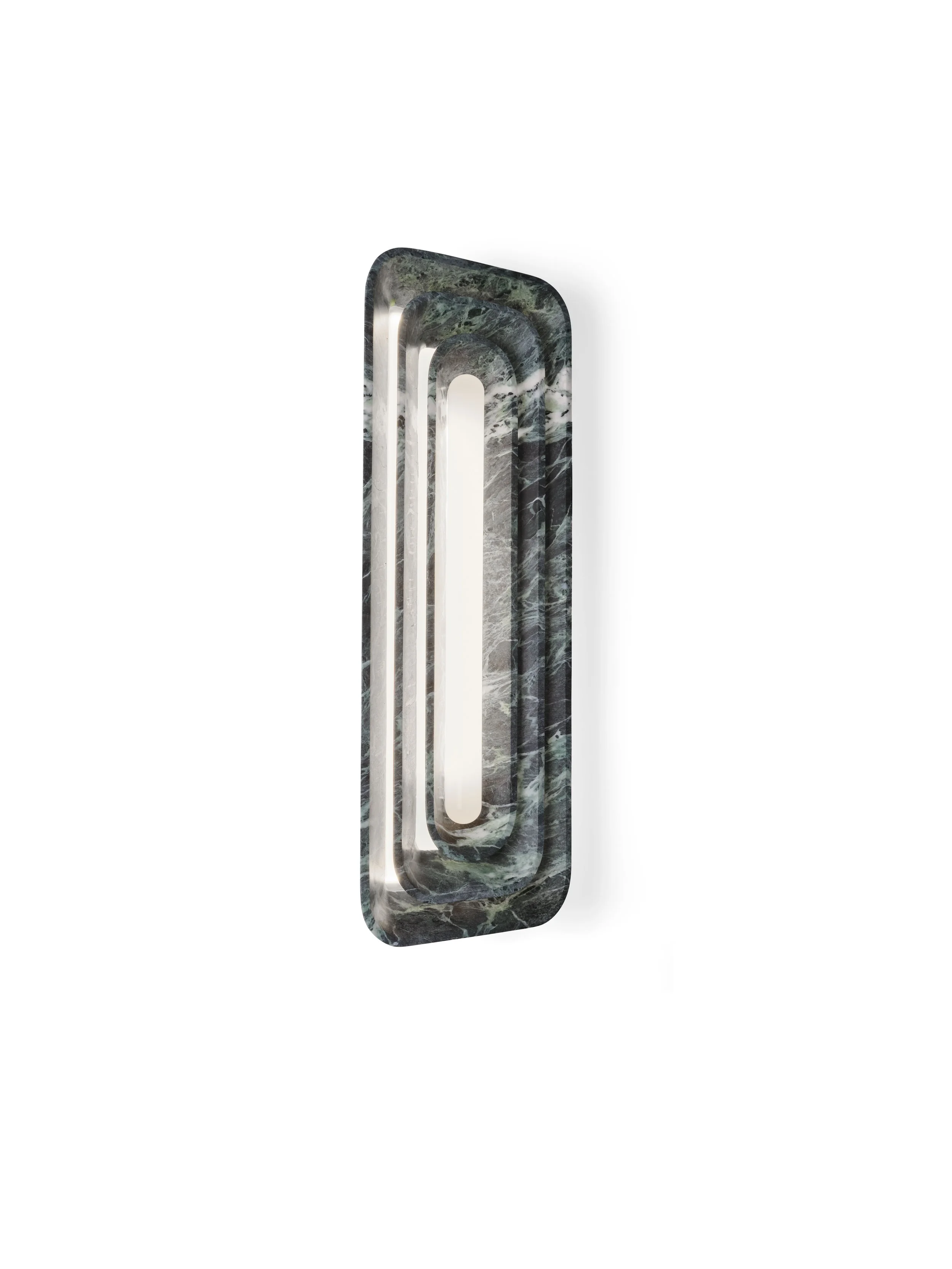
The trilogy concludes with Sfogliatella, a wall light carved from marble that feels less constructed than revealed. Layered like a natural formation, the piece encloses a concealed light source that pulses softly from within. The effect is subtle but transformative: the object becomes a living fragment of architecture, its illumination suggesting growth, metamorphosis, and quiet vitality. It is here that Ange’s interest in emotional resonance becomes most explicit—light not as function, but as narrative.
What unites the three works is not material or typology, but intent. Rather than replicating nature, Ange interprets it through sensation—embrace, shelter, transformation—allowing each piece to operate as a conduit for experience rather than a solution for space.
In a design landscape increasingly driven by spectacle and speed, this collection proposes something more enduring: that objects, when stripped of expectation, can hold emotional weight equal to architecture itself. And in doing so, Marc Ange continues to position himself not just as a designer of furniture, but as a choreographer of how we feel within space.