Moiré Gallery Milano at Design Week 2026: Aurea and the Reinvention of the Gallerist’s Desk as Cultural Object
Aurea, the gallerist’s desk
In the evolving lexicon of contemporary design, where the boundaries between utility, sculpture, and narrative continue to dissolve, Milano Design Week 2026 offers yet another meditation on the role of authorship in space-making. At the center of this discourse is Moiré Gallery Milano—an art, fashion, and design platform located in the Quadrilatero district at Via Borgospesso 18—presenting Aurea, the gallerist’s desk, a work that reframes the most private instrument of the gallery ecosystem as a public statement of aesthetic intent.
Conceived by architect and designer Isabella Garbagnati, a descendant of Gio Ponti, Aurea operates within a lineage that is less about inheritance than interpretation. It is not a nostalgic echo of Italian modernism, but rather a disciplined continuation of its principles—lightness, structural clarity, and the elevation of everyday objects into architectural thought.
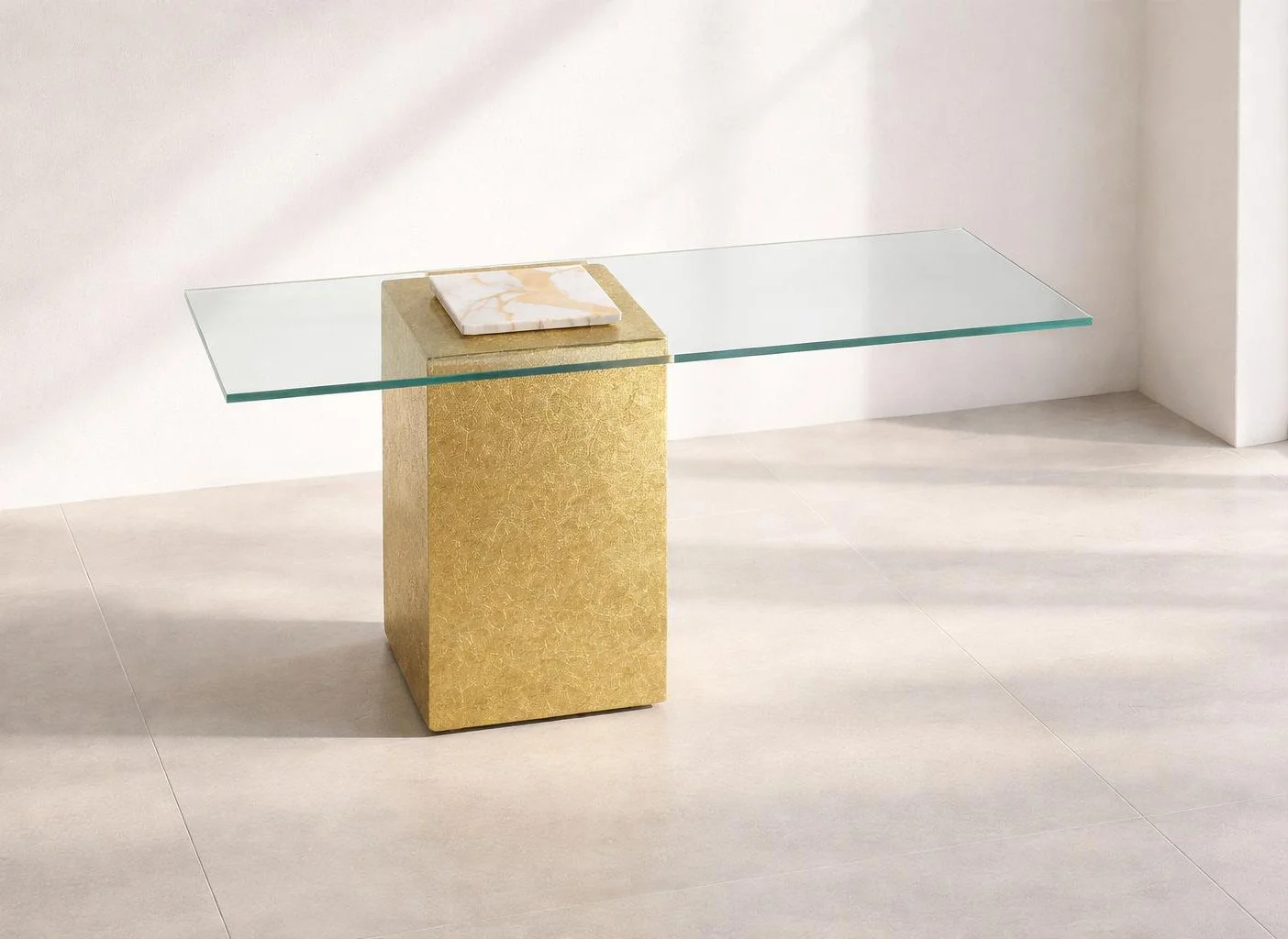
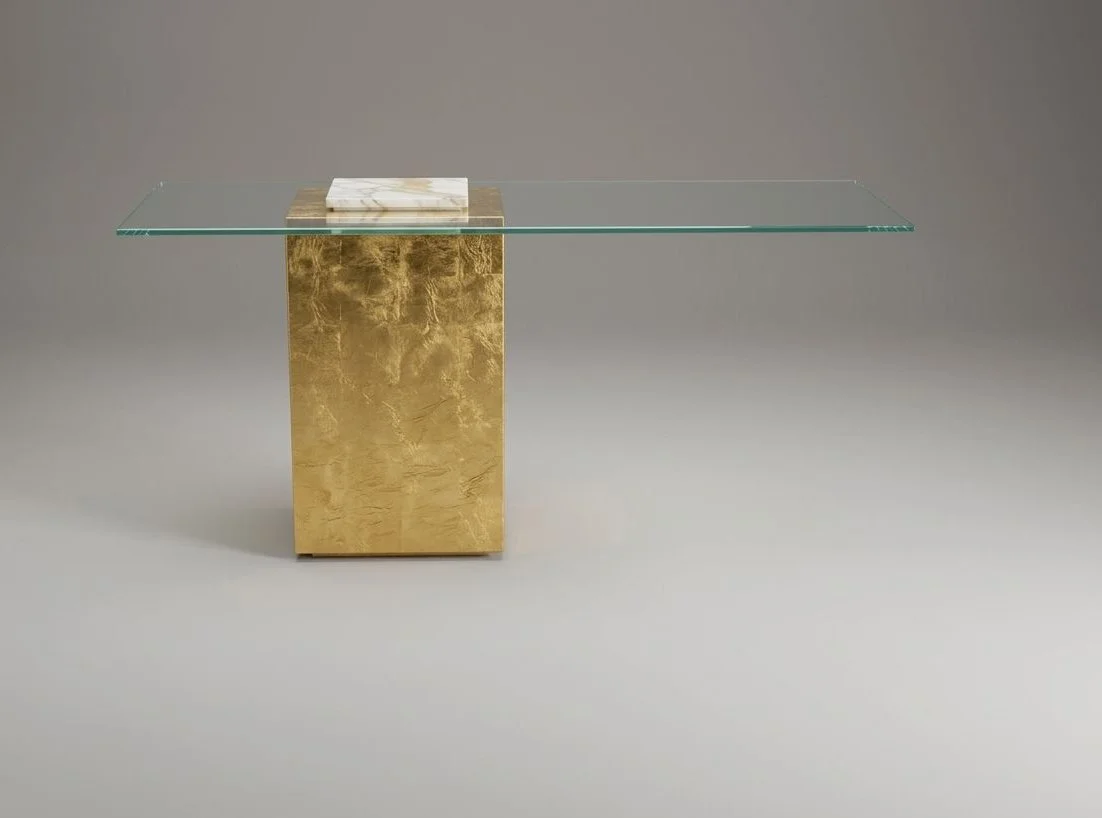
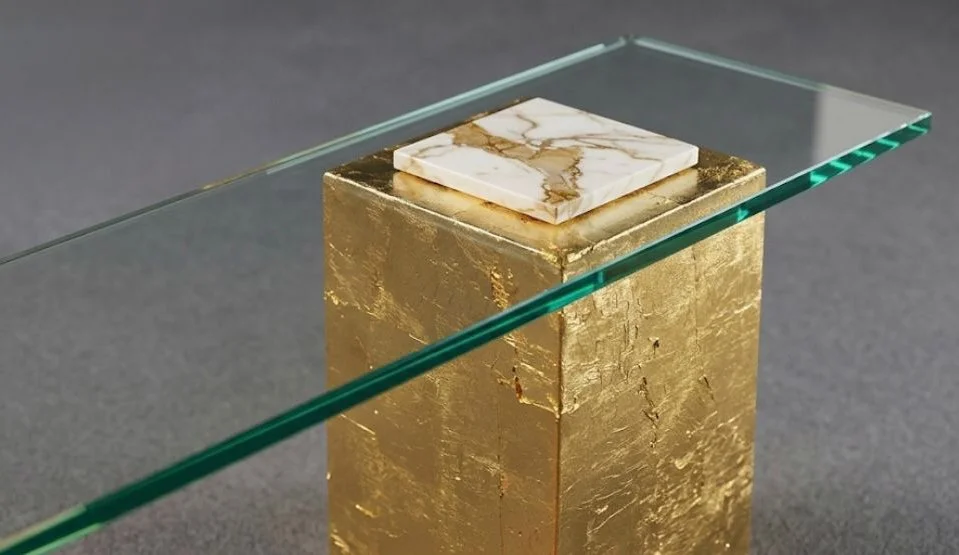
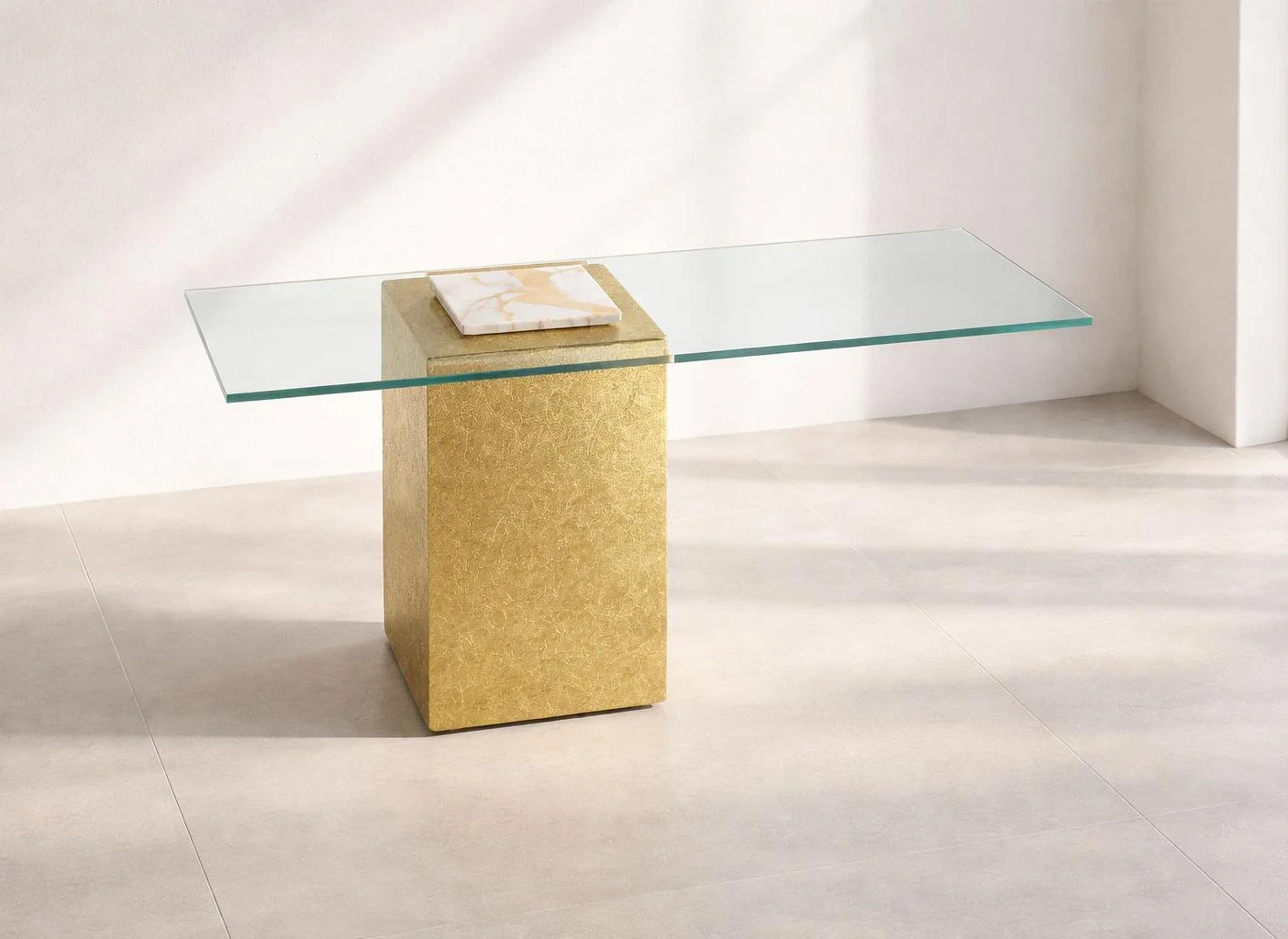
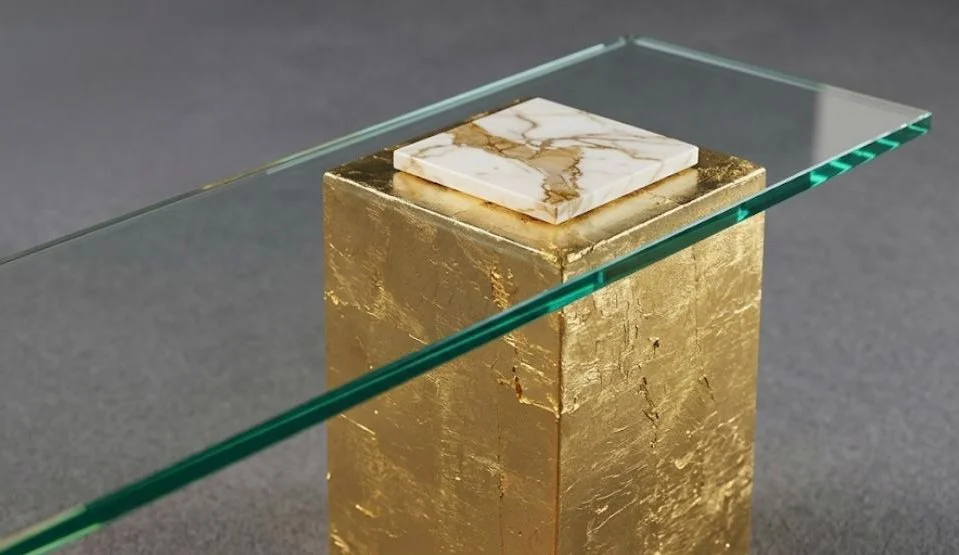
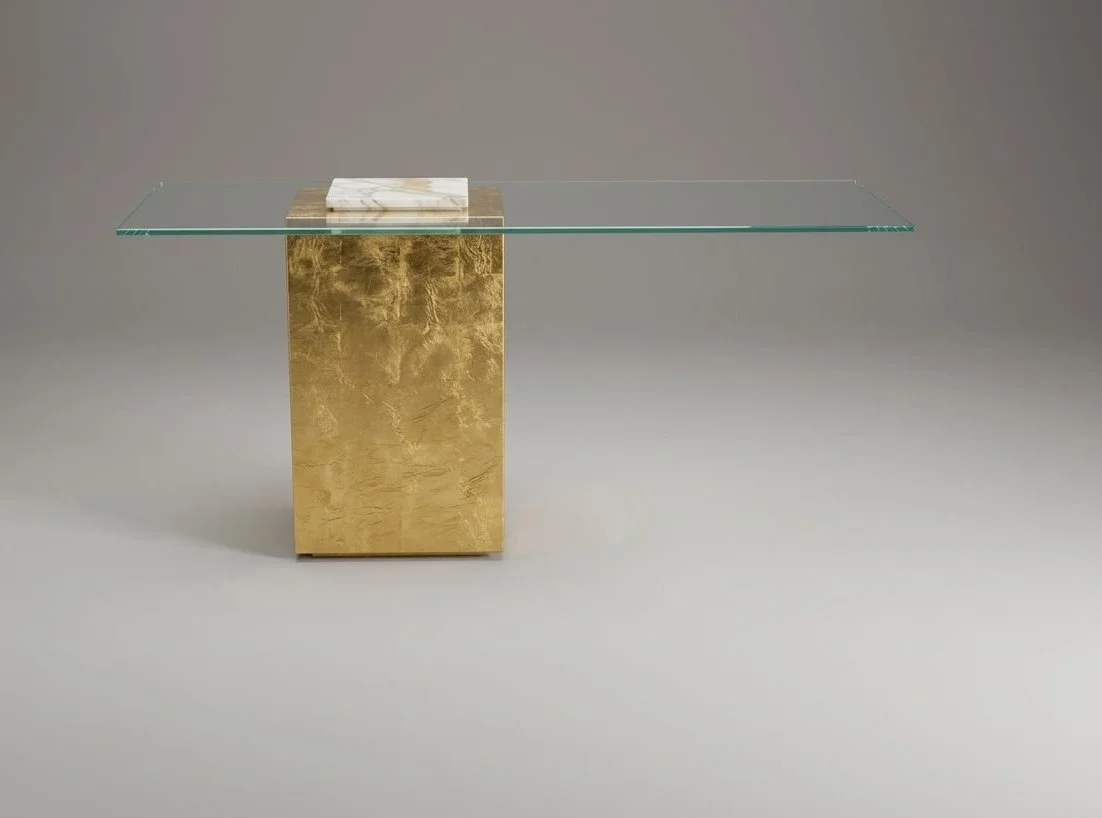
The desk’s composition is deliberately restrained yet materially assertive. A glass top establishes visual weightlessness, dissolving the boundary between object and environment. Beneath it, an off-center base finished in gold leaf asserts a sculptural presence that is both asymmetrical and intentional—an articulation of tension rather than symmetry. The interior structure reveals concealed shelving, integrating functionality without compromising the purity of silhouette. It is here that Aurea reveals its conceptual intelligence: utility is not hidden in compromise, but embedded as architecture.
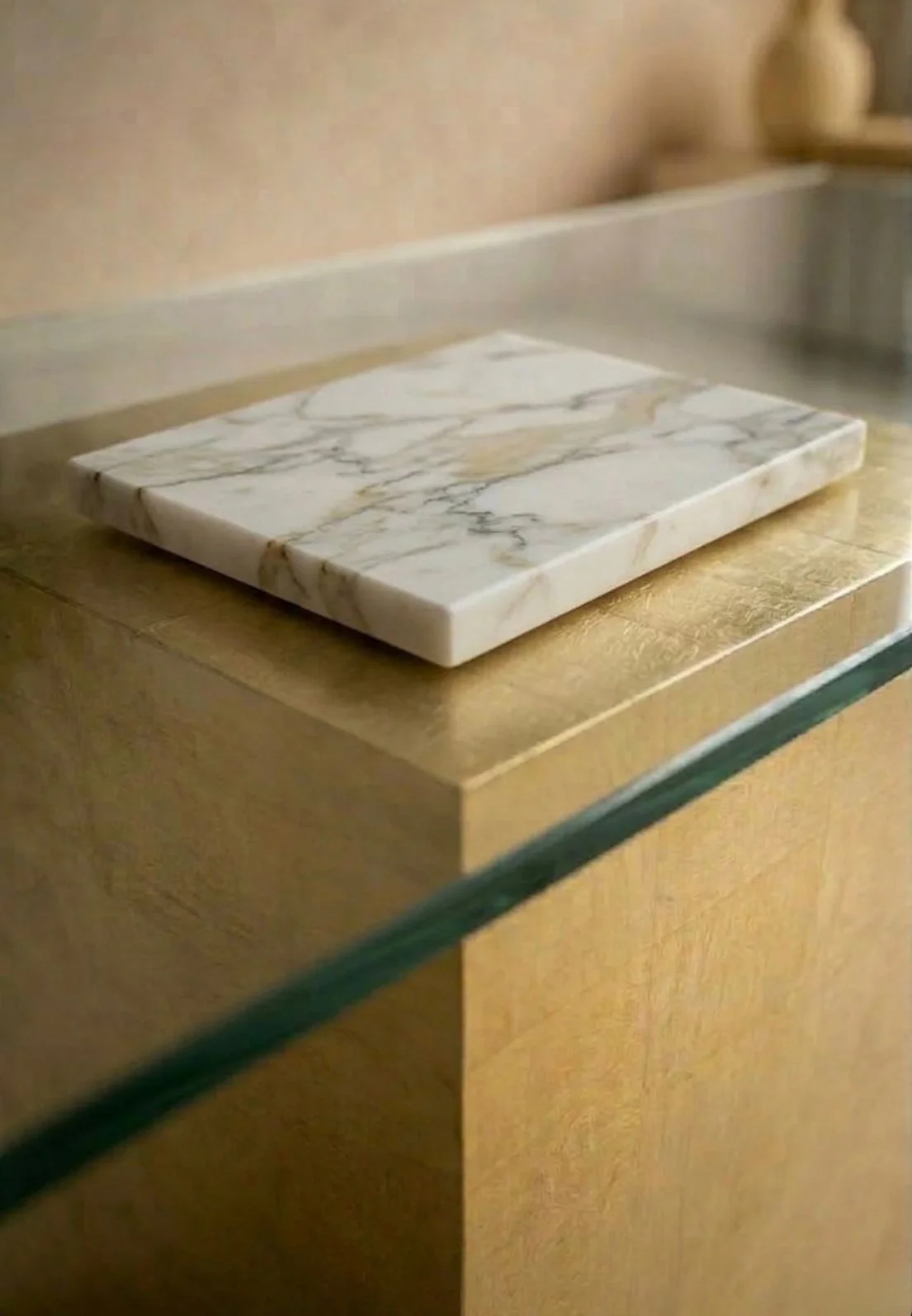
The name itself, derived from the Latin aureus—“shining like gold”—extends beyond material reference into conceptual positioning. Gold, in this context, is not ornamental excess but an index of value: labor, curation, and the invisible administrative architectures that underpin cultural production. The moiré marble detailing further anchors the piece to its institutional context, subtly referencing the gallery’s own identity through texture and optical vibration.
Ouafa Lotfi Tahoun, founder and curator of Moiré Gallery Milano, frames the project as an intersection of necessity and authorship: a functional requirement elevated through design intelligence into an object of permanence. The result is not merely a workstation, but an editorialized environment—an object that stages the act of curation itself.
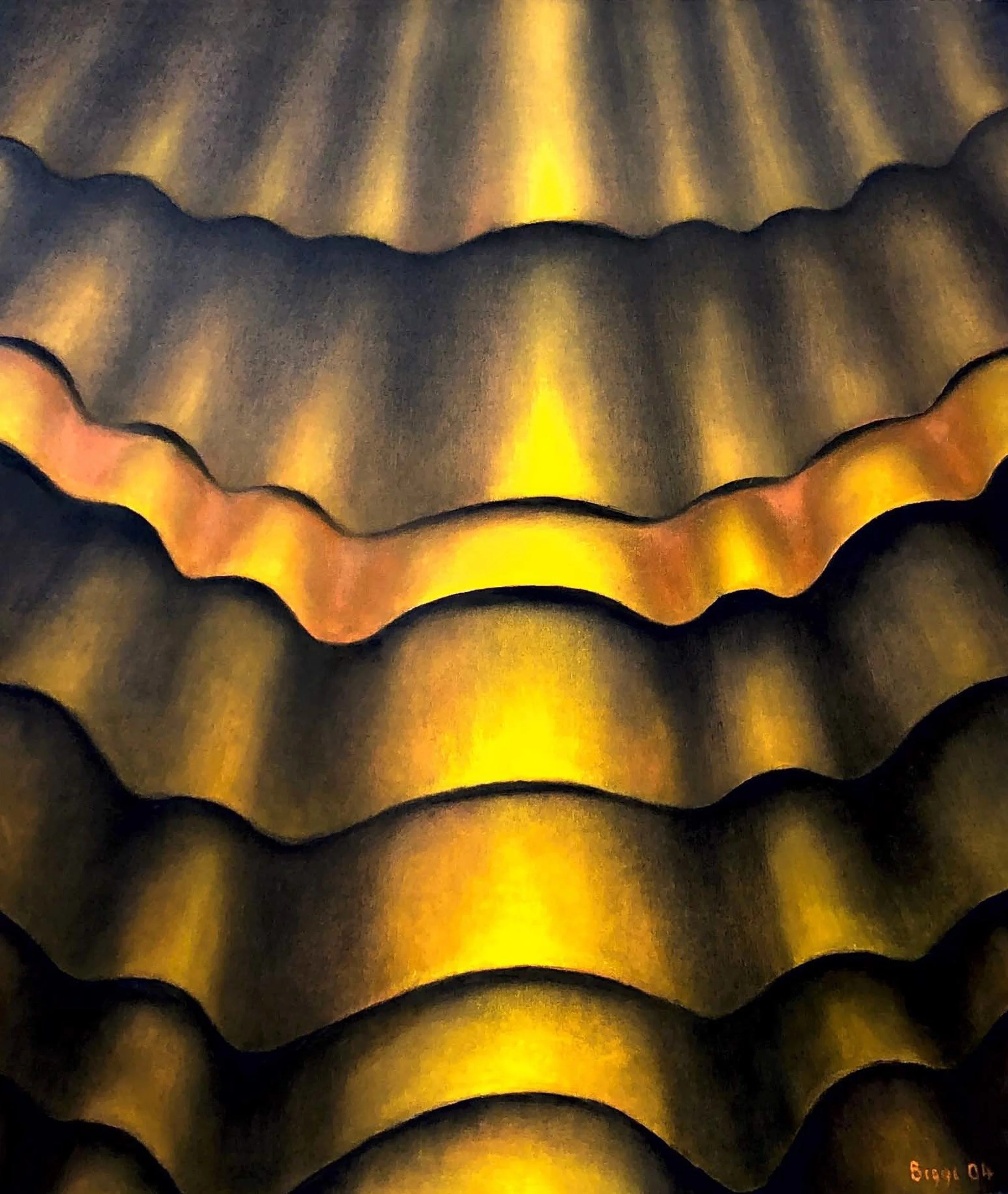
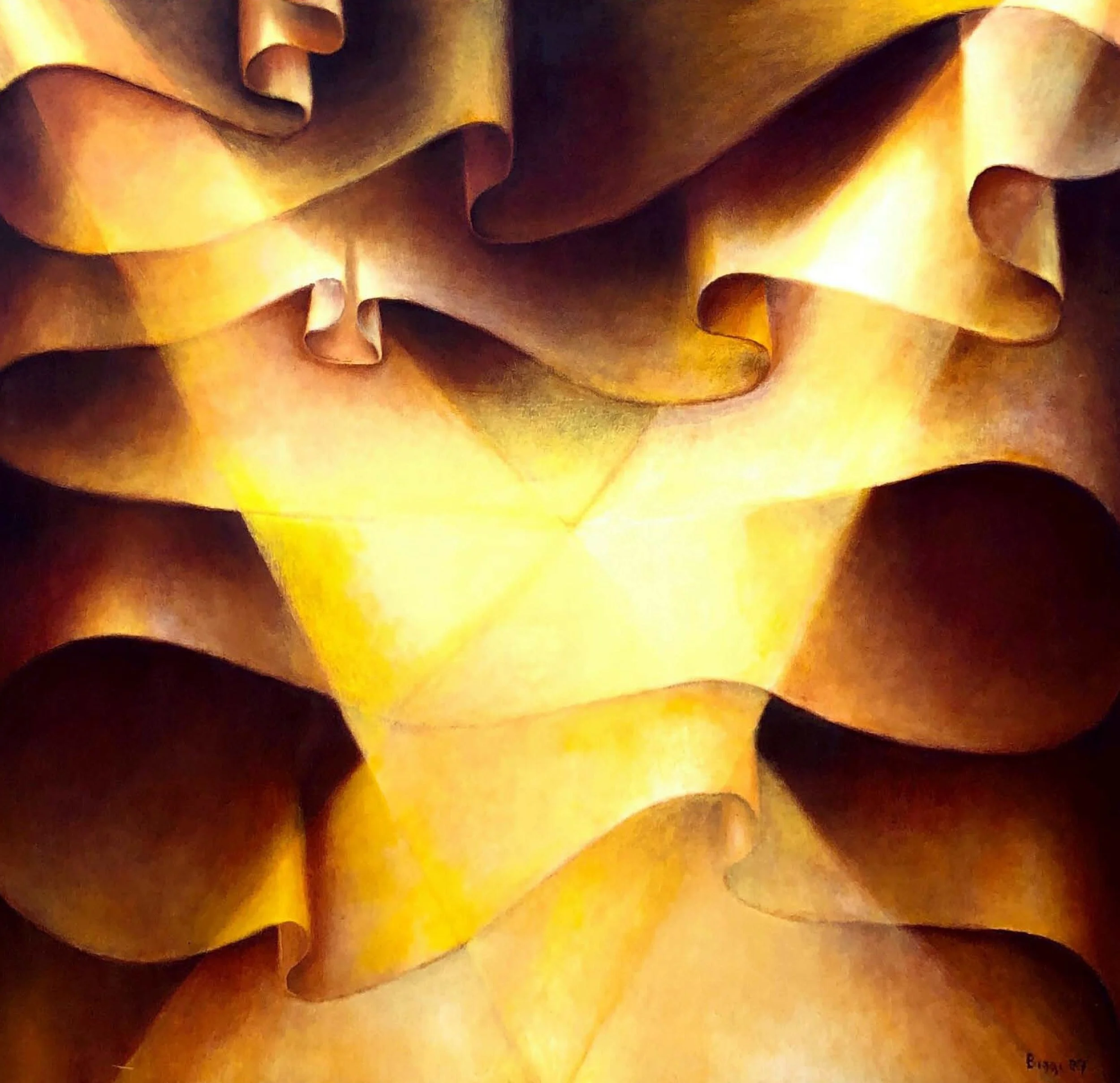
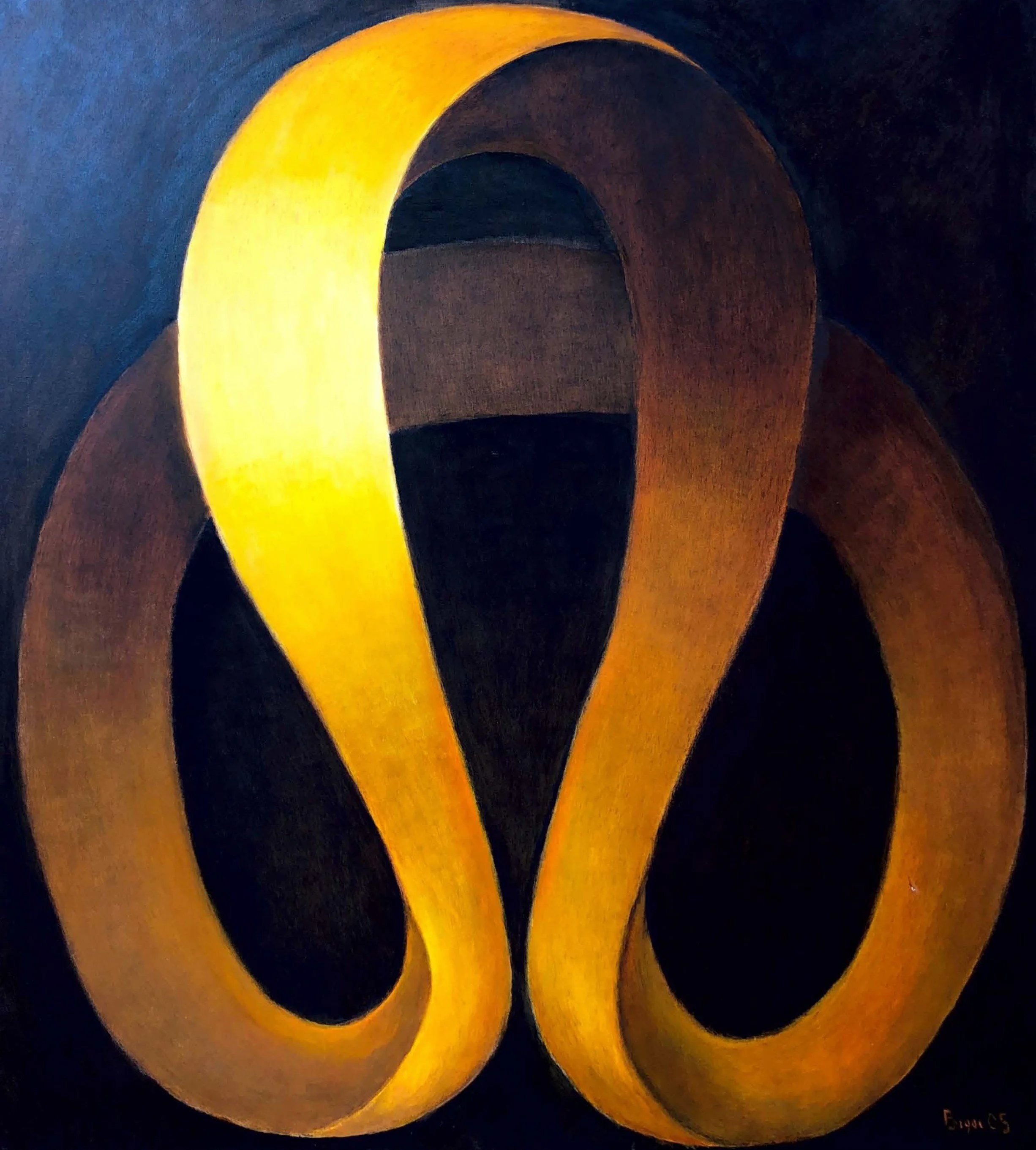
Presented alongside a selection of oil paintings by Pino Biggi (1930–2019), the installation extends its dialogue beyond design into artistic practice. Biggi’s oeuvre—marked by silence, drapery, and chromatic restraint—introduces a counterpoint to Aurea’s material precision. The works, exhibited and made available for sale for the first time exclusively at Moiré Gallery Milano, situate the desk within a broader temporal conversation between object and image, function and memory.
In this pairing, Design Week becomes less an exhibition calendar and more an atmospheric condition—where objects, paintings, and spatial narratives converge into a single curatorial language. Moiré Gallery Milano positions itself not as a passive venue, but as an orchestrator of this convergence: a space where art, fashion, and design are not adjacent disciplines, but overlapping grammars of contemporary culture.
Ultimately, Aurea is less about the desk as typology and more about the desk as ideology. It asks what it means to work within beauty, and whether functionality itself can be elevated to the status of cultural authorship.