
Reframing A Continent: The Brooklyn Museum’s Bold Reimagining Of African Art And Institutional Space
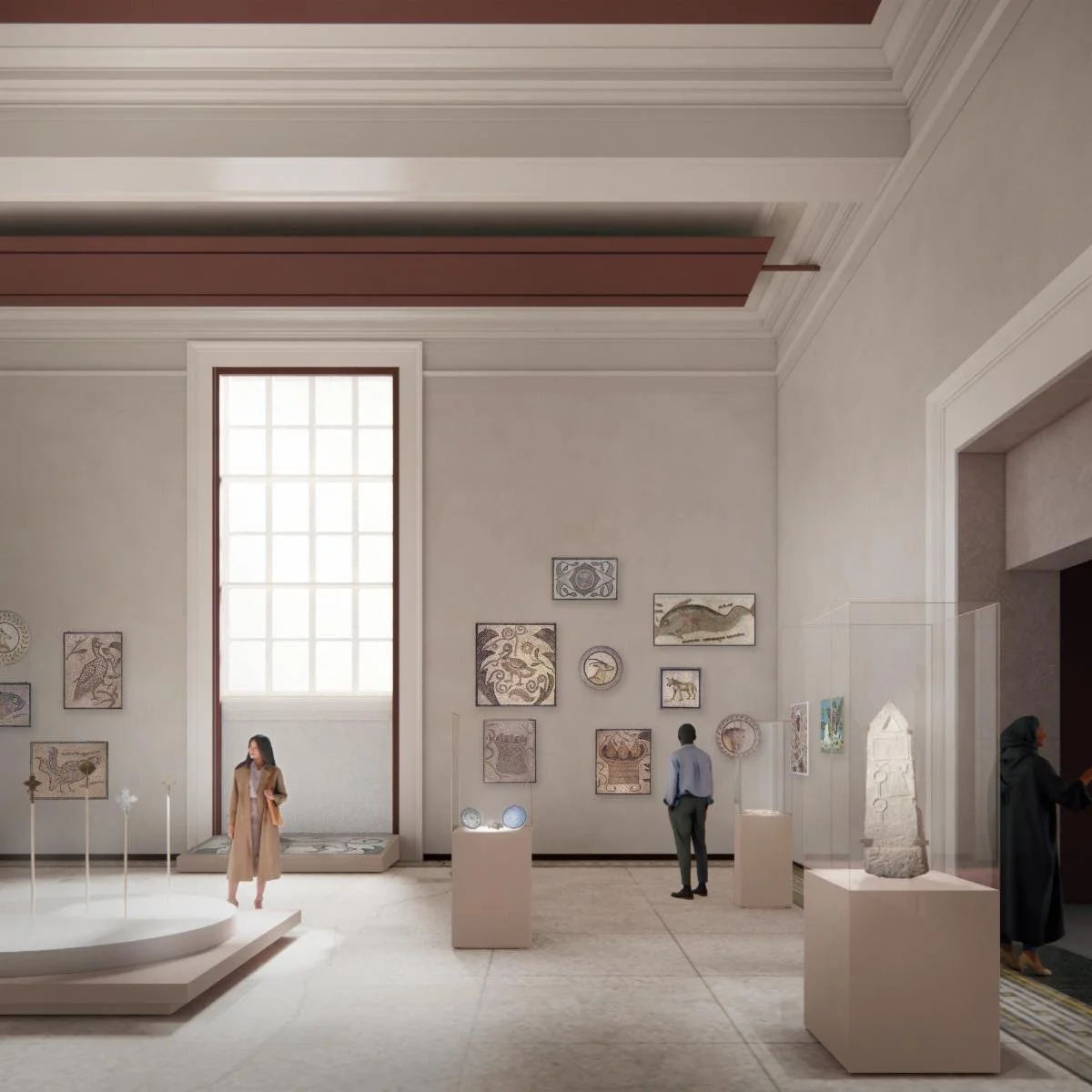
At a moment when museums across the United States are reexamining not just what they show but how they show it, the Brooklyn Museum is making a decisive architectural and curatorial statement—one that reframes African art not as a siloed category, but as a living, expansive continuum.
Set to open in fall 2027, the institution’s newly announced Arts of Africa galleries will transform 6,400 square feet of previously underutilized space into a permanent, immersive home for one of the country’s most significant collections. Housing more than 300 works spanning antiquity to the present, the initiative is less a renovation than a recalibration—an effort to align physical space with contemporary scholarship and global cultural dialogue.
The move reflects a broader institutional shift led by Director Anne Pasternak, who has steadily positioned the museum as both a civic anchor and a platform for recontextualizing art histories. In this case, the ambition is clear: to dissolve outdated geographic and conceptual boundaries that have long separated African works from adjacent narratives. By physically linking the new galleries to the museum’s Egyptian collection, the project challenges traditional Western categorizations and instead presents North Africa as inseparable from the broader continental story.
Architecturally, the commission given to Peterson Rich Office—in collaboration with Beyer Blinder Belle—leans into contrast rather than cohesion. Rather than smoothing over the building’s layered history, the design emphasizes it. Galleries of varying proportions and eras—from the soaring Beaux-Arts volumes of the early 20th century to the more intimate 1920s expansions—will retain their individuality, unified not by uniformity but by a shared contemporary language of exposed infrastructure and material intervention.
This architectural honesty mirrors the curatorial framework being developed by Ernestine White-Mifetu and Annissa Malvoisin, whose approach positions African art as both historical artifact and contemporary force. Their vision foregrounds movement—of people, materials, and ideas—across geographic corridors like the Nile, the Sahara, and the Atlantic, ultimately situating the continent as a central node in global cultural exchange rather than a peripheral one.
That framing is critical. For decades, African art in American institutions was often presented through an ethnographic lens, stripped of authorship and artistic agency. The Brooklyn Museum itself was an early outlier, first exhibiting African works in 1923 as art objects rather than anthropological specimens. This new installation builds on that legacy while expanding its scope, integrating contemporary media—photography, video, and interdisciplinary works—alongside historical masterpieces to reflect an unbroken lineage of innovation.
Equally significant is the project’s spatial strategy. The restoration of an original enfilade—reopening sightlines and circulation paths from the museum’s 1893 design—does more than improve visitor flow. It reinstates a sense of continuity, allowing audiences to move through African and Egyptian galleries as part of a single, evolving narrative. In doing so, the museum quietly challenges one of the most persistent structural biases in encyclopedic institutions: the fragmentation of non-Western art histories.
Backed by approximately $13 million in public and philanthropic funding, including support from the Ford Foundation, the project is also emblematic of how cultural institutions are investing in infrastructure as a form of storytelling. Lighting systems, climate control, and other modern interventions are not concealed but highlighted—rendered in bold materials that signal the museum’s ongoing evolution rather than its preservation in stasis.
For a museum approaching its bicentennial, this initiative underscores a broader thesis: relevance is not achieved through expansion alone, but through reinterpretation. By bringing more of its 4,500-object African collection into public view—and doing so through a lens that prioritizes connection over categorization—the Brooklyn Museum is asserting a new institutional posture, one that acknowledges the past while actively reshaping how it is understood.
In an era where audiences are increasingly attuned to issues of representation and narrative authority, the project positions the museum not just as a repository of objects, but as a site of ongoing cultural negotiation—where architecture, scholarship, and community intersect to redefine what a global museum can be.
One-sentence summary:
The Brooklyn Museum’s $13 million Arts of Africa renovation reimagines both space and narrative, uniting architectural history with contemporary scholarship to present African art as a central, interconnected force in global culture.
